
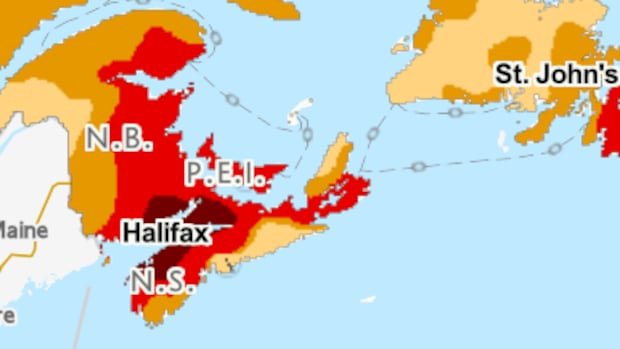
Nova Scotia is currently facing an unprecedented drought, with severe impacts on residents and agriculture. Professor Ian Spooner from Acadia University has been fielding concerns from locals, including a homeowner in the Annapolis Valley whose well has dried up for the first time, necessitating the use of bottled water.
The drought is classified as exceptional, the highest level on the national scale, affecting parts of Nova Scotia and New Brunswick. According to the Canadian Drought Monitor, southwest Nova Scotia and southeast New Brunswick are undergoing a one-in-50-year drought event. Trevor Hadwen, a specialist with Agriculture and Agri-Food Canada, noted that similar conditions were last observed in the 1960s.
The lack of precipitation has led to record dry spells in several Nova Scotia towns, with rainfall deficits exceeding 60% of normal levels. This has resulted in widespread agricultural distress, with crops suffering and reduced yields for various produce such as apples, corn, and blueberries.
The ramifications of the drought extend beyond agriculture, impacting the overall food supply chain. Alicia King, president of the Nova Scotia Federation of Agriculture, highlighted the challenges faced by farmers in providing food for livestock due to dwindling grasslands.
As the situation worsens, there are concerns about the long-term effects on plant growth and water supply systems. Spooner emphasized the importance of staying informed and proactive, urging people to research the hydrology of their land before rushing into drilling new wells.
Despite the bleak outlook, efforts are being made to mitigate the impact of the drought. However, the road to recovery will require significant moisture in the ground before winter sets in and during the spring to aid in plant regeneration. The focus remains on adaptation and preparedness to navigate through these challenging circumstances.

