
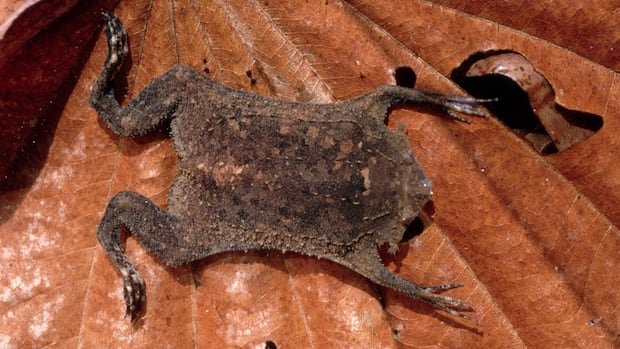
In a fascinating discovery, researchers in California have unveiled a remarkable ability of the Surinam toad, a creature known for its peculiar features. Despite its flat body, poor vision, and lack of a tongue, this amphibian is a skilled hunter in the murky waters of the Amazon basin.
For years, scientists have been intrigued by how the Surinam toad effectively hunts despite its limitations. Through a recent study led by neurobiologist Duncan Leitch from the University of California, Los Angeles, it was revealed that this toad, also known as the star-fingered toad, possesses a unique sensory mechanism in its fingertips.
The toad’s fingers are equipped with specialized lobes that function as highly sensitive touch organs, akin to the fovea in the human eye. These lobes, with intricate fractal patterns, can detect subtle water movements caused by nearby prey. This sensory ability enables the toad to accurately identify the size and proximity of potential food items.
With 128 tiny lobes on each fingertip, the Surinam toad’s fingers are densely packed with touch-sensitive nerves, making them incredibly responsive. Despite constituting only a small portion of the frog’s skin, these lobes house a significant proportion of touch receptors, showcasing the toad’s remarkable sensory adaptation.
This groundbreaking research sheds light on how the toad employs its fingertips to detect prey without direct contact, showcasing a sophisticated hunting strategy that challenges conventional notions of brain complexity in amphibians. The findings suggest a common evolutionary principle shared by frogs and mammals, emphasizing the importance of sensory specialization in survival strategies.

