
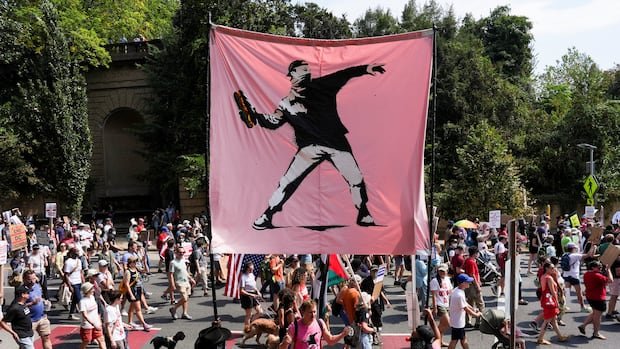
Sean Charles Dunn, a resident of Washington, D.C., threw a sandwich at a federal agent as a form of protest. The incident is now being deliberated by a jury to determine if it constitutes a federal offense. Assistant U.S. attorney John Parron emphasized to jurors that regardless of one’s motivations, it is unacceptable to physically assault others out of anger.
Dunn admitted to throwing his sandwich at a U.S. Customs and Border Protection agent outside a nightclub on August 10. His defense attorney, Julia Gatto, argued that the sandwich toss was Dunn’s way of expressing opposition to President Donald Trump’s law enforcement policies. Gatto described it as a harmless act following Dunn’s exercise of free speech and maintained his innocence.
The incident, captured in a viral bystander video, quickly gained traction on social media, portraying Dunn as a figure of resistance against the federal interventions under the Trump administration. The video showed Dunn shouting derogatory terms at the agents before the sandwich was thrown.
Customs and Border Patrol agent Gregory Lairmore, the primary witness for the prosecution, testified that the sandwich hit him with enough force to be felt through his protective gear. He described the sandwich’s ingredients as Dunn’s protest gesture exploded on impact.
Following a grand jury’s decision not to indict Dunn on a felony assault charge, he was charged with a misdemeanor instead. The trial also revealed that Lairmore and his colleagues received light-hearted gifts related to the incident, indicating a level of levity within the agency.
Dunn’s defense team highlighted the disproportionate response to the incident, citing his subsequent arrest by armed federal agents. They argued that Dunn’s political views were targeted unfairly, calling for a dismissal of the case based on selective prosecution.
As the trial progresses, it remains to be seen if Dunn will testify. The prosecutor emphasized that the case is not about political opinions but about Dunn’s actions crossing a legal boundary. The trial, which resumed the following day, continues to draw attention due to its political undertones and implications for free speech rights.

