
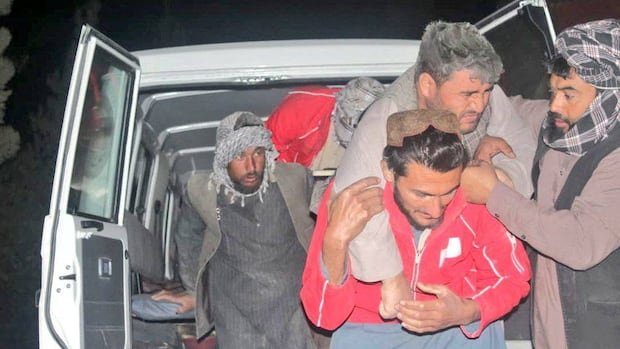
A powerful earthquake measuring 6.3 on the Richter scale struck close to Mazar-e Sharif in northern Afghanistan early on Monday, resulting in the loss of at least 20 lives, injuries to hundreds, and significant damage to the historic Blue Mosque in the city. The U.S. Geological Survey reported that the earthquake occurred at a depth of 28 kilometers near Mazar-e Sharif, a city with a population of approximately 523,000 residents.
Survivor Mohammad Rahim, residing in the Tashqurghan district near the epicenter, described experiencing intense shaking for about 15 seconds before the dust clouded the area, hindering visibility. His family members were trapped in the debris but were later rescued by local volunteers and rescue teams.
According to initial estimates from the Afghanistan National Disaster Management Authority, the earthquake claimed the lives of 20 individuals and left 643 injured, with 25 in critical condition. Health Ministry spokesperson Sharfat Zaman confirmed the dispatch of rescue and medical teams to the affected area, with nearby hospitals on standby to provide care to the injured.
Footage released by the Afghan Ministry of Defence depicted military personnel engaging in rescue operations, including the recovery of a young girl’s body from the rubble. The United Nations mission in Afghanistan expressed its commitment to supporting the rescue efforts and providing necessary aid to the affected communities.
India also extended its support by sending relief supplies to the impacted areas. Foreign Minister Subrahmanyam Jaishankar assured that additional medical aid would be delivered promptly to assist the earthquake-affected communities.
The earthquake caused significant damage to the Blue Mosque, a revered site in Mazar-e Sharif believed to be the burial place of the Prophet Mohammad’s cousin and son-in-law. Although the main structure of the mosque remained intact, broken masonry and tiles littered the courtyard.
This calamity adds to the challenges faced by Afghanistan’s Taliban-led administration, which is already dealing with a series of crises, including a previous earthquake in August, a decline in foreign assistance, and the mass expulsion of Afghan refugees by neighboring nations. The power supply across the country, including in Kabul, was disrupted by the earthquake, as reported by the national power supplier Da Afghanistan Breshna Company.
Save the Children highlighted the increased humanitarian needs in Afghanistan following the earthquake, especially as winter approaches and temperatures plummet. The vulnerable country, situated on active fault lines, faces recurrent seismic threats, with past earthquakes causing substantial casualties and damages.
The latest earthquake underscores the urgency of a coordinated response at the regional or national level to address the pressing humanitarian and reconstruction requirements in the affected areas.

