
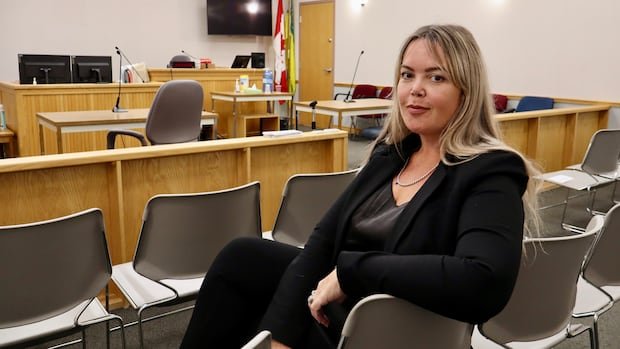
Susan Sebulsky’s pride in her nine-month-old son taking his first steps at a Regina courthouse is evident. For her, it marked a personal journey towards stability. Having struggled with a destructive cycle of substance abuse, criminal activities, and incarceration for a prolonged period, she reluctantly enrolled in drug treatment court with little hope for change.
Drug treatment courts, also known as therapeutic courts, offer individuals the chance to address the root causes of their criminal behavior, aiming to provide treatment rather than punishment. Sebulsky, who had been involved in selling drugs and theft to sustain her crystal meth addiction, never imagined that her life would take a different turn when she first engaged with the program.
Fast forward 13 years, Sebulsky, now 49, has been appointed as the coordinator for Saskatchewan’s new drug treatment court in North Battleford, funded by a federal allocation of $10.6 million distributed among 23 similar courts across Canada. Reflecting on the unexpected turn of events, Sebulsky expressed her astonishment at the transformative journey she has undertaken.
Sebulsky’s narrative is a testament to the possibilities that exist within the system, though outcomes are not guaranteed. Her descent into drug abuse intensified when she turned to selling drugs to fuel her addiction, resulting in a string of criminal charges. It wasn’t until a pivotal moment in 2011, when she found herself pregnant and facing incarceration, that she sought help through the drug treatment court program.
The drug treatment court model, which focuses on intensive treatment and counseling rather than punitive measures, requires participants to commit to a structured program that includes regular court appearances, drug screenings, and counseling sessions. Sebulsky’s successful completion of the program led to her employment by the Ministry of Justice, a journey that has come full circle from her initial struggles.
The collaborative effort of the drug treatment court team, consisting of judges, court staff, legal representatives, probation officers, healthcare professionals, and community organizations, plays a vital role in supporting participants through their recovery journey. Sebulsky’s story highlights the importance of understanding and compassion in facilitating positive change within the justice system.
While success stories like Sebulsky’s underscore the potential of drug treatment courts to reduce recidivism and improve individual outcomes, challenges persist in measuring the overall impact of such programs. Despite the complexities of addiction and societal pressures, individuals like Sebulsky continue to inspire hope through their resilience and commitment to change.
Sebulsky’s remarkable journey from addiction and crime to rehabilitation and empowerment serves as a beacon of hope for those navigating similar challenges. By leveraging her personal experiences to support others in their recovery journey, she embodies the transformative potential of second chances and the power of community-driven rehabilitation initiatives.

