
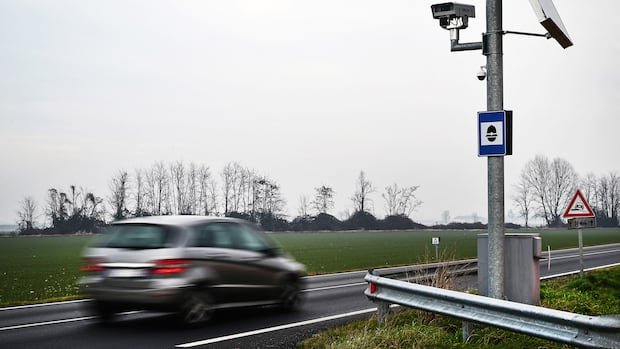
On a cold day in 2024, residents in a suburban area near Padua, Italy woke up to a surprising sight: a speed camera vandalized with an angle grinder, displaying the message “Fleximan is coming.” The name Fleximan has gained a legendary status in Italy due to numerous similar speed camera attacks.
Despite the flashy vigilantism associated with Fleximan, there is a widespread consensus across Europe that speed cameras are effective and widely supported. A project manager at the European Transport Safety Council (ETSC) noted that there is high public backing for stricter enforcement measures to reduce speeding.
Italy, leading in the number of active speed cameras in Europe, reflects this trend with nearly 70% of Italians supporting stricter speeding rules, despite almost half admitting to speeding in the past month. In contrast, Ontario’s Premier Doug Ford’s opposition to speed cameras raises questions about how Europe succeeded in garnering such broad acceptance for automated enforcement systems that could potentially save lives.
France serves as a compelling example of successful speed camera implementation. Following a series of notable traffic accidents in 2002, French President Jacques Chirac prioritized reducing traffic fatalities. Today, France operates over 2,400 speed cameras, showcasing the importance of top-level political commitment in establishing and maintaining such systems.
France’s approach includes using fixed cameras for prevention and mobile units for enforcement, contributing to reduced average speeds and significant declines in road accidents across Europe. However, immediate impacts, such as drastic speed reductions near camera sites, can lead to backlash over time, as seen in France with vandalism affecting a significant portion of the camera network.
Experts emphasize the importance of strategic camera placement and transparent targeting to maintain public support. Setting reasonable speed limits and focusing on high-speed outliers can help address concerns about fairness and effectiveness, as seen in Ontario’s speed camera debates.
While speed cameras have proven effective in curbing speeding, challenges persist, including the need for meaningful speed limits and addressing public perceptions of enforcement fairness. Despite some opposition, supporters like Tom Roper in Italy advocate for speed cameras as a necessary measure to enhance road safety amid growing concerns over reckless driving behaviors.

