
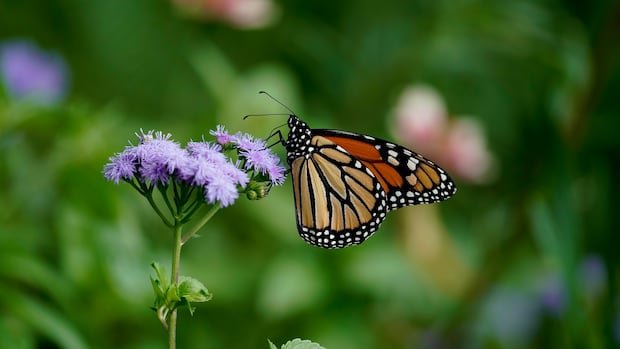
MaryAnn Lepp observed a significant increase in monarch butterflies undergoing their transformation in her garden, with 20 caterpillars feeding on her swamp milkweed in just one day this week. This surge in backyard milkweed patches across the Prairie region is being witnessed by numerous Canadian monarch enthusiasts, including Lepp in La Broquerie, located about 60 kilometers southeast of Winnipeg.
While it remains uncertain if the favorable weather conditions are the primary factor driving this phenomenon, conservation experts acknowledge the abundance of anecdotal reports of caterpillars, chrysalises, and monarch butterflies as a positive indication for the federally endangered species. Marika Olynyk, the curator of the Living Prairie Museum, noted a substantial presence of monarchs in Winnipeg this year, emphasizing the importance of preserving their habitat.
Monarchs primarily rely on milkweed as caterpillars, while they also feed on nectar from various flowering plants as adults. Despite efforts by individuals like Lepp to plant milkweed and native wildflowers, these species are still not as abundant as they once were due to habitat loss caused by the conversion of grasslands into farmland.
The monarch butterfly, listed as endangered in 2016, faces significant threats due to habitat destruction. Conservationists stress the urgent need to protect these species and their habitats. While progress has been made in conservation efforts, there is still a long way to go to ensure the sustainable population of monarch butterflies.
In addition to monarchs, other butterfly species, including the critically endangered Poweshiek skipperling, are also facing challenges. Efforts to breed and release Poweshiek skipperlings at the Assiniboine Park Zoo in Manitoba have shown promising results this summer, offering hope for the recovery of this species.
As part of conservation initiatives, zoo staff will be using radio transmitters to track the migration of monarch butterflies to Mexico. Enthusiasts like Lepp are dedicated to protecting and nurturing caterpillars and chrysalises, underscoring the importance of fostering a harmonious relationship with nature and promoting biodiversity.

