
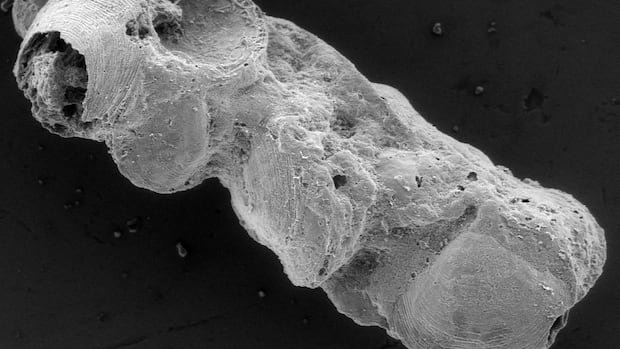
Long before the existence of dinosaurs, there was a surge in biodiversity leading to the rise of early predecessors of present-day animals, accompanied by an increase in fecal matter. A recent study sheds light on how the examination of coprolites, fossilized excrement, aids in comprehending the ancient ecosystems of Earth, nutrient cycles, and animal interactions today.
The study, featured in the journal Trends in Evolution & Ecology, delved into the analysis of fecal fossils dating back to the Cambrian period, approximately 540 million years ago. By studying fecal records from primitive worms, invertebrates, and mollusk-like creatures, researchers deduced that excrement played a vital role in enhancing the habitability of deep-water ecosystems and enriching nutrient availability during that era, well before the dinosaur era.
The revelation that fecal matter was abundant during the Cambrian period holds significant implications for unraveling the origins of modern oceanic ecosystems. Julien Kimmig, co-author of the study and head of the paleontology division at the Karlsruhe Natural History Museum in Germany, emphasized the importance of recognizing the pivotal role of feces in sustaining both past and contemporary marine ecosystems.
The research conducted by Kimmig and Russell Bicknell involved the examination of hundreds of coprolites from 37 sites worldwide, including specimens from their own collections and those housed in museum archives. These coprolites originated from various burrowing worms, arthropods, brachiopods, and hyoliths, evolving from microscopic forms to sizes comparable to rabbit droppings and eventually progressing to larger, visible excreta containing remnants of shells or worms.
Beyond shedding light on evolutionary processes and predator-prey dynamics, the analysis of coprolites offers insights into Earth’s ecological systems and the transformative impact of the Cambrian Explosion on ecosystems. The study underscores the relevance of paleontology in understanding how past ecosystems adapted to environmental shifts, laying the foundation for predicting future ecological scenarios.
In the context of the Cambrian period, the examination of fecal remnants enriches the understanding of one of Earth’s most intriguing episodes. Preceding the Cambrian era, the Ediacaran period witnessed the emergence of enigmatic fossils that defy classification within modern animal groups. However, the Cambrian Radiation, occurring around 520-540 million years ago, introduced fossil records of organisms related to contemporary marine life forms, marking a significant diversification of species.
The investigation into the Cambrian Radiation suggests a notable surge in fecal traces compared to the preceding Ediacaran period. While conventional focus within this field often centers on predator-prey dynamics and evolutionary conflicts, studying waste products, nutrient cycles, and their impact on biodiversity provides a deeper understanding of ecosystems, transcending biological realms to geological eras, thus informing interpretations of current and future ecological trends.
Fecal remnants have assumed a central role in paleontological research, expanding the scope of inquiry into ancient ecosystems. Fossilized excrement, though challenging to study and lacking the allure of dinosaur bones, offers valuable insights into interactions among organisms and carbon cycles. The study of coprolites complements traditional fossil analyses by elucidating dietary habits, ecological relationships, and unexpected behaviors of ancient life forms.
The significance of coprolites in enriching our understanding of prehistoric environments is underscored by the findings of researchers such as Karen Chin, a paleontologist based at the University of Colorado Museum of Natural History. Chin’s exploration of coprolites from the Mesozoic era, characterized by the dominance of dinosaurs, highlights the pivotal role of fecal fossils in deciphering complex ecological interactions and nutrient cycles that shaped ancient ecosystems.
By delving into coprolites, researchers aim to unravel hidden facets of ancient life forms, offering glimpses into dietary preferences and ecological adaptations that may hold relevance for contemporary and future ecological studies. The underexplored realm of coprolites presents a treasure trove of information awaiting further investigation and appreciation within the scientific community.

