
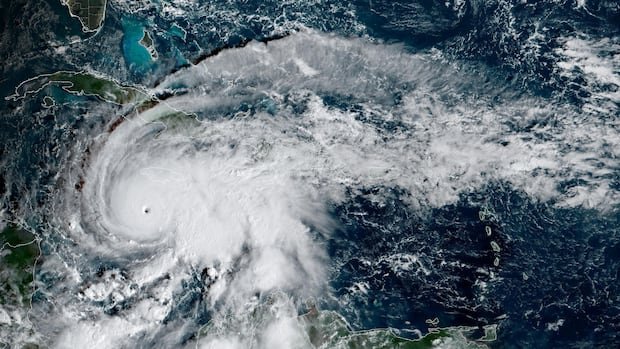
Hurricane Melissa, one of the most powerful storms ever witnessed in the Caribbean, is expected to make landfall in Jamaica early Tuesday following a rapid intensification phase driven by climate-related factors leading to increasingly destructive storms in the region.
Initially classified as a tropical storm on Saturday morning, Melissa swiftly escalated from wind speeds of approximately 115 kilometers per hour to 225 kilometers per hour within a day, becoming a Category 5 hurricane by Monday morning. The storm’s wind velocity surged to 281 kilometers per hour later that day, marking it as the strongest storm globally in 2025, as reported by the U.S. National Hurricane Center (NHC).
With its slow movement, Melissa poses a significant threat, as noted by Akshay Deoras, a research scientist at the U.K.’s National Centre for Atmospheric Science at the University of Reading. Deoras highlighted the potential for heavy rainfall when a slow-moving tropical cyclone like Melissa approaches, heightening the risk of extensive precipitation over Jamaica.
Melissa has already claimed six lives across the Caribbean, prompting Jamaica to brace for what could be its most severe hurricane catastrophe to date. The NHC forecasts that certain regions of the country may receive up to a meter of rainfall due to the storm’s impact.
Last year, Hurricane Beryl struck the southern part of Jamaica, resulting in losses amounting to approximately $200 million US, equivalent to 1.1 per cent of Jamaica’s GDP. Notably, Hurricane Beryl also underwent rapid intensification similar to Melissa.
Deoras attributed Melissa’s rapid development to two key factors: unusually high ocean surface temperatures in the Caribbean, exceeding normal levels by two to three degrees, and the reliance of tropical storms on the energy derived from the warm surface water. Melissa thrived in these warm conditions, allowing it to intensify swiftly as it moved slowly through the region during the weekend.
Global trends reveal that rising ocean temperatures are influencing climate patterns worldwide, with a significant heatwave in the Pacific Ocean impacting North America this fall. Last year marked the highest global average sea surface temperatures on record.
Climate analysts like Shel Winkley from Climate Central emphasize that climate change has significantly elevated the likelihood of hot ocean temperatures by 500 to 700 times. Moreover, their analysis indicates that climate change has bolstered Melissa’s maximum wind speed by approximately 16 km/h, amplifying potential damages by 50 per cent.
Winkley notes that four of this year’s five hurricanes have experienced extreme rapid intensification, a phenomenon becoming more frequent each season compared to previous decades.
This evolution in hurricane behavior underscores the escalating impact of climate change on storm intensification and highlights the urgent need for proactive measures to mitigate future risks.

