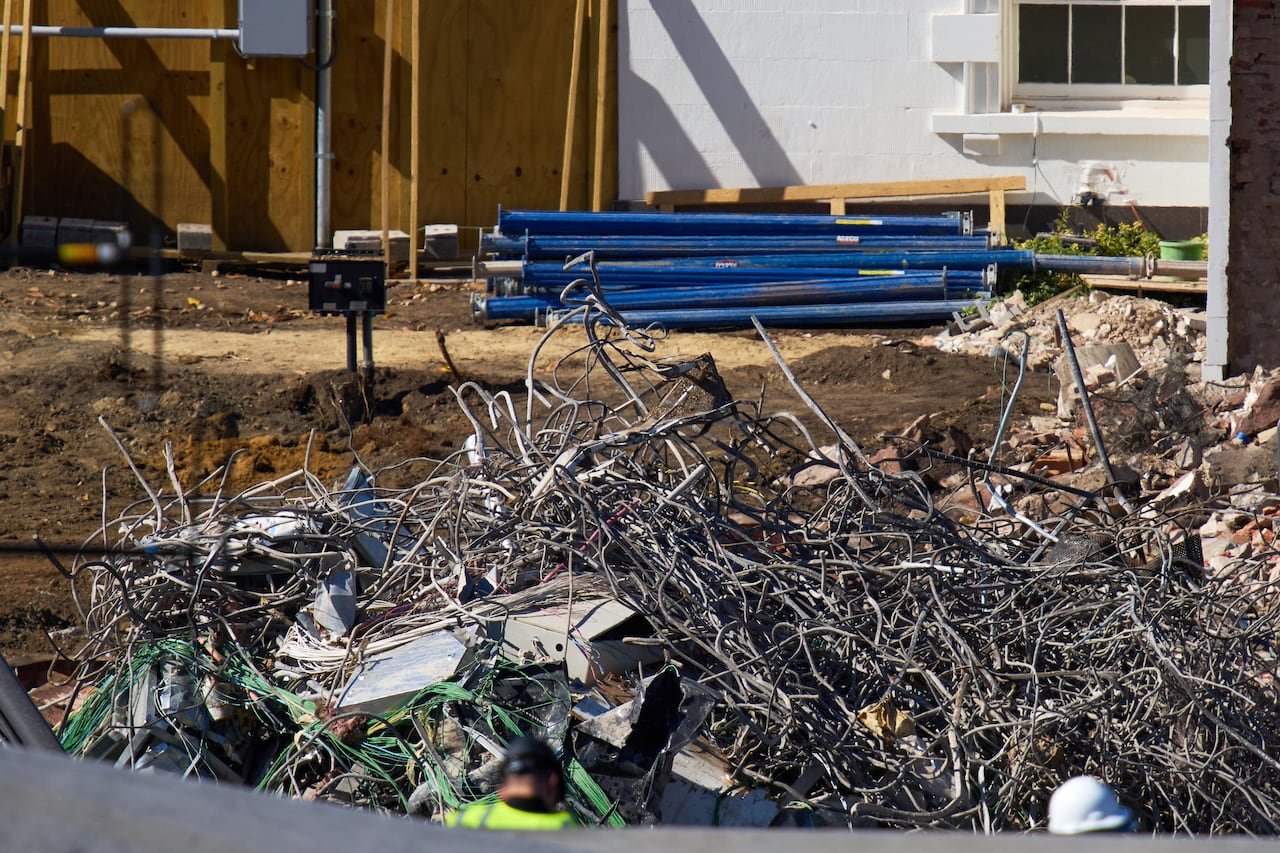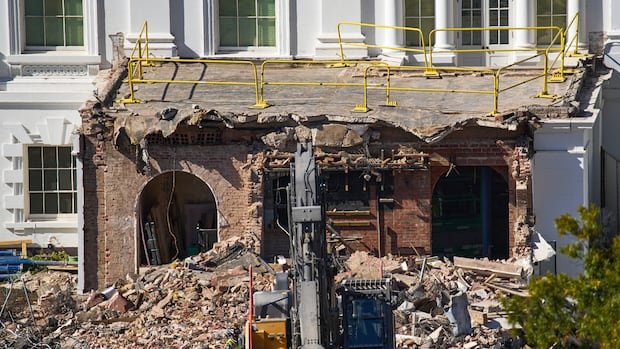

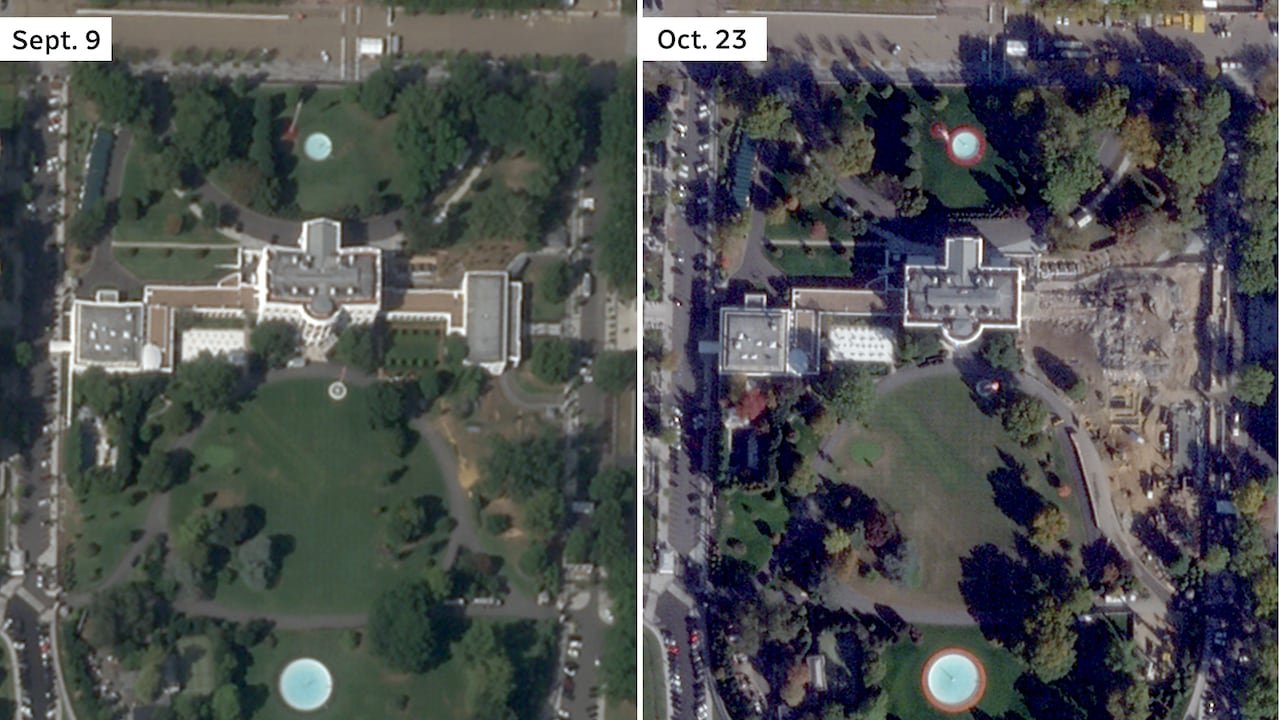
The Democratic Party has vowed to launch an investigation into the rapid White House demolition led by President Donald Trump and his administration. This move has sparked a wave of social media posts mourning the loss of the East Wing, which was nearly completely demolished within three days of construction initiation. The East Wing, originally established over a century ago during President Teddy Roosevelt’s tenure, has historically housed the president’s spouse and served as the primary entrance for public tours and high-profile events like state dinners.
Simultaneously, the White House disclosed a list of donors contributing funds towards the construction of a future ballroom on the premises. The administration asserts that this project will not burden taxpayers, as it is entirely funded by private donations. However, critics argue that soliciting money from the private sector raises ethical concerns.
Hakeem Jeffries, a prominent Democratic leader in the House, criticized President Trump for allegedly engaging in a pay-to-play scheme, emphasizing concerns about potential conflicts of interest. Jeffries assured that the Democrats will push for accountability and an inquiry into the circumstances surrounding the demolition, although their capacity to act is limited in the current Republican-dominated House.
Tech Giants Among Contributors
While specific donation amounts remain undisclosed, tech giants such as Amazon, Apple, Meta, and Alphabet were among the entities listed as contributors to the ballroom construction project. CBS News reported that donors have the option to contribute a lump sum or distribute their donations in installments by 2027.
Corporate entities like Lockheed Martin and Carrier expressed gratitude for the opportunity to support the construction of the ballroom by providing services such as world-class HVAC systems. The donations have come under scrutiny amid Trump’s second term, characterized by pressure on various sectors for concessions and actions aligned with the administration’s policy objectives.
Notably, the proposed 90,000 square-foot ballroom represents the most significant structural alteration to the White House in nearly eight decades. Contrary to earlier statements by Trump and the White House press secretary, the project’s cost estimates have escalated over time, with the ballroom now set to accommodate nearly 1,000 individuals.
Trump’s decision to seek private funding for the ballroom mirrors past practices, with predecessors like Gerald Ford and the Obamas also relying on private donations for specific White House projects. However, the scale and implications of the current demolition and reconstruction project have drawn significant attention and controversy.