
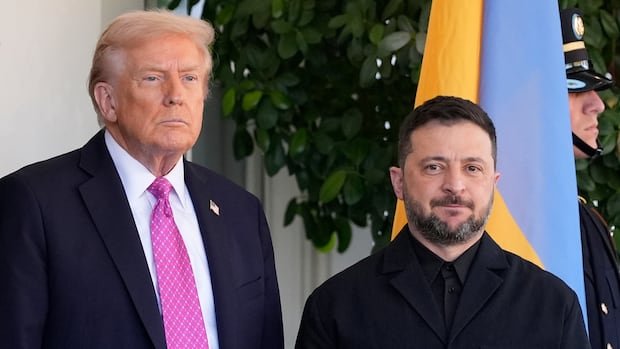

The dynamic of U.S. President Donald Trump’s position on the conflict in Ukraine has shifted back in alignment with Russian President Vladimir Putin’s perspective. Trump had created some uncertainty in recent weeks about potentially taking a tougher stance against Russia’s actions in Ukraine and aligning more closely with the European Union. However, the remarks that sparked this speculation during the U.N. General Assembly turned out to be more of a temporary deviation than a genuine policy shift.
After hinting at the possibility of providing Ukraine with Tomahawk cruise missiles, Trump engaged in a lengthy phone call with Putin at the Russian leader’s request. Subsequently, during a meeting with Ukrainian President Volodymyr Zelenskyy at the White House, Trump retreated from the missile deal and emphasized his belief that Putin desires peace.
Phillips O’Brien, a strategic studies professor at the University of St. Andrews in Scotland, noted that Trump’s current stance is consistent with his administration’s actions, including cutting financial aid to Ukraine, refraining from imposing new direct sanctions on Russia, and urging Zelenskyy to make territorial concessions.
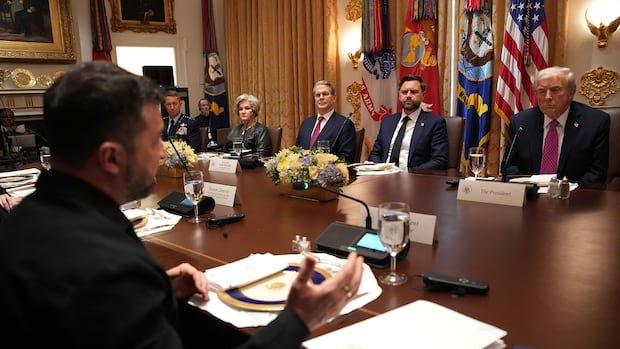
O’Brien criticized Trump’s misleading signals regarding his support for Ukraine and stance toward Russia, suggesting that Zelenskyy was misled into expecting Tomahawks, only to face disappointment.
Putin’s Influence on Trump
While Trump did not publicly embarrass Zelenskyy during their White House meeting, reports indicated that he strongly pressured the Ukrainian president in private. Trump, in a heated exchange, demanded that Zelenskyy accept Putin’s terms to end the conflict, including surrendering territory, or risk Russian retaliation, as reported by the Financial Times and Reuters.
Michael Bociurkiw, a global affairs analyst and senior fellow at the Atlantic Council, suggested that Putin effectively swayed Trump during their phone conversation, influencing him to reject providing Tomahawk missiles to Ukraine. Bociurkiw emphasized Putin’s ability to influence Trump’s decisions.
In subsequent developments, Trump further solidified his pro-Russia stance by suggesting leaving the frontlines in Ukraine’s Donbas region unchanged, effectively rewarding Russia for its past actions. Additionally, he revised his previous statement on Ukraine’s chances of winning the war, highlighting the unpredictable nature of conflicts.
