
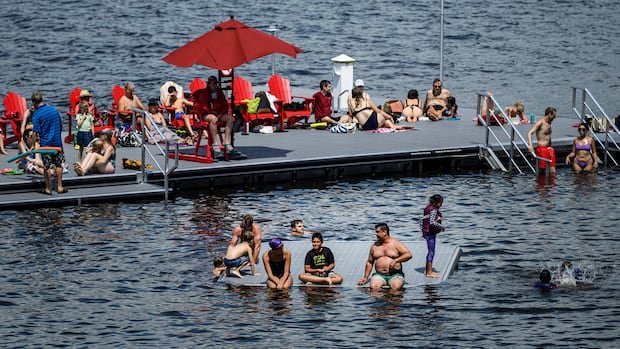
After a spate of drowning incidents in Europe’s unprecedented heat wave, advocates are encouraging Canadians to prioritize safety this summer while also advocating for increased public swimming access nationwide. France’s prime minister recently disclosed that 40 individuals drowned in just a few days amid scorching temperatures exceeding 40 degrees Celsius, with similar reports emerging from Germany during the heat wave.
Canada is bracing for its own heat wave this week, with portions of Ontario and Quebec projected to reach the mid-30s. Lenea Grace, the executive director of the Lifesaving Society of BC & Yukon, emphasized the importance of being cautious around bodies of water, highlighting the hidden dangers like currents, undertows, and submerged logs that could pose threats even to proficient swimmers.
Grace noted that as of June 29, there have been 92 drownings in Canada this year, a slightly lower figure than the same period last year, although spikes have been observed in British Columbia and Ontario. She advised opting for water bodies with lifeguards whenever feasible, swimming in crowded areas, ensuring close supervision of young children, and wearing life jackets for those lacking strong swimming skills.
In Montreal, the borough mayor of Verdun called for enhanced safety measures around water access points following a recent drowning incident at Verdun Beach, marking the fourth drowning in the vicinity in over a year. Gregary Ford, vice president of Swim Drink Fish, stressed that heat waves prompt more people to venture outdoors, leading some to explore public waters for the first time.
Swim Drink Fish’s Blue Flag program highlights 13 Canadian beaches meeting stringent environmental and safety standards, advocating for more clean and free swimming spaces. With rising global temperatures, Ford underscored the significance of “blue space” as natural cooling havens to counteract climate change impacts.
Matthew Sykes, co-founder of the Swimmable Cities Initiative, emphasized the need for proper swimming infrastructure in cities to prevent accidents like those witnessed in Europe. Ottawa has become the first Canadian city to endorse the Swimmable Cities Charter publicly.
Bacteria remains a major concern for safe public swimming experiences. Swim Drink Fish’s Swim Guide offers real-time data on water cleanliness across various locations. Lynn Wharram from Surfrider South Vancouver Island’s Blue Water Task Force emphasized the risks of bacterial contamination in water bodies, especially after heavy rainfall or in stagnant waters.
Wharram highlighted the growing issue of blue-green algae in lakes due to warming temperatures and runoff from urban areas, emphasizing the importance of avoiding waterborne illnesses. Technological interventions, such as oxygenation systems, are being explored to restore swimmable conditions in affected areas. Wharram cautioned against risky activities like cliff jumping and swimming far from shore during the summer, advising extra caution due to the heat’s potential impact on swimmers’ endurance.

