
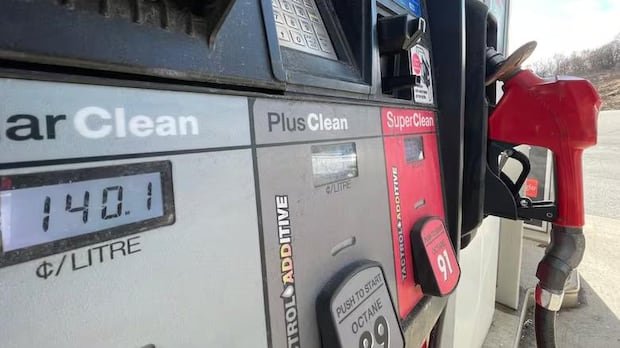
After an extended postponement, New Brunswick Premier Susan Holt has reaffirmed her government’s dedication to fulfilling a campaign pledge to eliminate “carbon adjuster charges” imposed on gasoline and diesel consumers. The new deadline set for ending this levy is December. Holt emphasized the government’s commitment by stating, “We promised to remove the burden of the carbon adjustor from New Brunswickers, and we will honor that commitment this year,” in a statement sent to CBC News.
Petroleum companies, who believed they had persuaded the government to abandon the plan to eliminate adjuster charges months ago, are now expressing concern and cautioning about potential “catastrophic” impacts on their operations if the renewed commitment is implemented.
During an Energy and Utilities Board hearing conducted earlier this month to review petroleum wholesale margins, industry stakeholders appeared more alarmed by the prospect of the carbon adjuster being reintroduced than by the forecasted wholesale price trends. David Knight, representing various stations through the Canadian Energy Marketers Association and Convenience Industry Council of Canada, expressed his surprise at the revival of the plan to cut adjuster charges.
Formed by the previous Progressive Conservative government of Blaine Higgs in 2023, the adjuster aimed to enable oil companies to transfer the costs of adhering to new federal environmental standards for refineries and fuel importers to consumers. The weekly adjustments to the charges are determined by a formula adopted by the New Brunswick Energy and Utilities Board. Presently, the gasoline charge amounts to $3.11 (plus HST) on a 40-liter fill-up.
Last year, Holt, while serving as the official opposition leader, criticized the adjuster as unjust to consumers and argued that refineries should bear the expenses of maintaining their environmental standards. She confronted Higgs on this issue during several legislative sessions, demanding a reversal of the policy.
In the provincial election campaign last October, Holt promised to immediately eliminate the adjuster charge from gas prices if her government took office. However, upon assuming power, her administration hesitated and retained the charge thus far.
In June, the legislature passed legislation to abolish the adjuster levy, though its implementation has been delayed due to concerns raised during hearings regarding the impact on independent retailers and rural gas stations, which heavily rely on the revenue generated by the adjuster charge.
Nonetheless, in August, Finance and Energy Minister René Legacy announced that the adjuster charge would be terminated as soon as new higher margins for both retail and wholesale sectors were established by the Energy and Utilities Board.
Several industry participants warned during hearings that the sudden elimination of the two-year-old charges could lead to financial turmoil for certain operators. Knight stressed the potential catastrophic consequences on the industry if the carbon cost adjuster was removed without a suitable alternative in place.
Carol Montreuil of the Canadian Fuels Association echoed these concerns, emphasizing that the abrupt removal of this revenue source would severely impact many businesses in the retail petroleum sector.
Holt responded to industry apprehensions by affirming the government’s commitment to ending the adjuster charge. She stated, “We continue to closely monitor the EUB hearings to consider all viewpoints. Our pledge to eliminate the carbon adjuster and provide financial relief for New Brunswickers remains unwavering.”

