
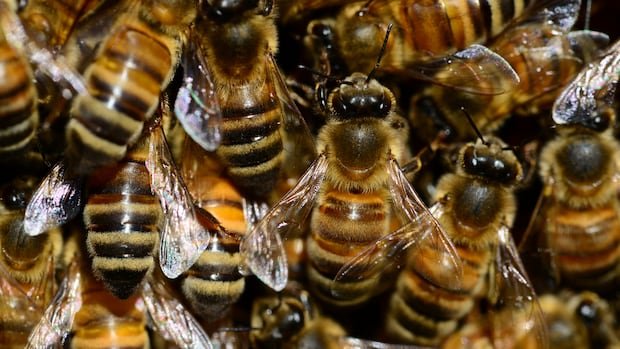
In Canada’s frigid conditions, beekeepers face challenges, as highlighted in a 2025 report by the Canadian Association of Professional Apiculturists, revealing a significant failure rate of over 41% among honeybee colonies in Alberta during that winter. To address this issue, Beekeeping Innovations Ltd., based in the Calgary area, has introduced an inventive solution known as the Bee Cube. This specialized apiary, located in Okotoks, features a fully climate-controlled environment capable of accommodating multiple honeybee colonies.
“The primary objective is to ensure bees survive the winter comfortably,” stated Herman Van Reekum, the company’s CEO and founder. Besides aiding bees through the cold season, the Bee Cube offers a promising opportunity to revolutionize Canada’s beekeeping sector. Van Reekum emphasized the focus on enhancing queen bee production through a safe and cost-effective system within the Bee Cube.
The current reliance of Canadian beekeepers on importing foreign queen bees, approximately 300,000 annually from countries like Australia, New Zealand, California, and Hawaii, poses challenges. Imported bees not only struggle to adapt to the new environment but also bring the risk of introducing harmful pests like varroa mites, which have caused significant damage to honeybee populations globally.
Van Reekum underscored the potential threat posed by the Tropilaelaps mite, a highly destructive pest not yet established in North America but found in bee colonies across Asia, Europe, and Africa. He emphasized the importance of reducing reliance on foreign bees by promoting the production of domestic queen bees, which could lead to lower mite infection rates and potentially result in bees with genetic resilience to survive harsh Canadian winters.
The process of queen bee production involves selecting a larva and feeding it royal jelly to trigger its development into a queen bee. Each hive typically has a single queen bee responsible for laying eggs. To produce more queens, beekeepers transfer “queen cells” from one hive to a queenless colony. Careful monitoring is essential to ensure successful queen emergence and subsequent mating with drone bees to establish new colonies.
Van Reekum highlighted the significance of maintaining a strong genetic lineage from queens that have successfully endured Canadian winters. The company aims to significantly increase queen bee production from 800 to 5,000 this year. Alberta stands out as Canada’s primary honey producer, housing nearly 40% of the country’s bee colonies and holding the title of the largest honey producer in the nation.
The Canadian honey industry, valued at $241 million in 2025, contributes significantly to the agricultural sector by providing essential pollination services. Van Reekum stressed the vital role bees play in pollinating crops, highlighting their impact on food production and the agricultural economy.
In conclusion, the innovative Bee Cube and the focus on domestic queen bee production represent crucial steps towards enhancing Canada’s beekeeping industry and ensuring the sustainability of honeybee populations in the face of environmental challenges.

