
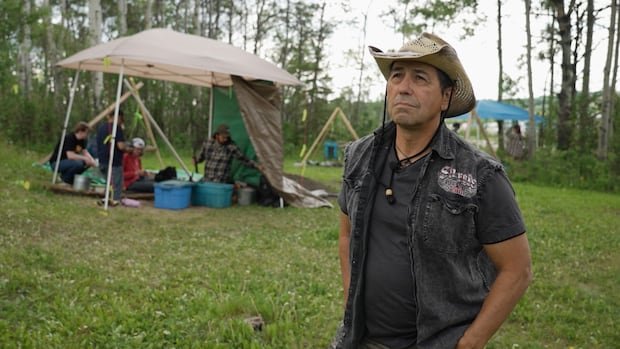
An archaeological field school located near Fort St. John, B.C., at a national historic site is currently providing insights into 12,500 years of First Nations history. The site, known as Tse’k’wa, is owned by Doig River, Prophet River, and West Moberly First Nations, whose Dane-zaa ancestors have inhabited the area for generations.
According to Laura Webb, an Elder from West Moberly, Tse’k’wa is an ancient archaeological site that validates the longstanding presence of the Dane-zaa people over millennia. The artifacts discovered at the site, including ancient stone tools and animal bones, are evidence of a history dating back at least 12,500 years.
Tse’k’wa is among over 57,000 recognized archaeological sites in the province, revealing a rich history of human settlement in North America since the last ice age. The site serves as a platform for the nations to share their cultural heritage, language, and history with interested individuals.
While the public is welcome to visit the site, the field school activities are carried out by students from the University of Northern British Columbia. According to Webb, Tse’k’wa is a place for cultural teachings and sharing traditions, showcasing the harmonious relationship that the Dane-zaa people had with nature.
The region’s history includes the presence of long-extinct giant bison, which once roamed the Peace valley as the landscape evolved from grassland to boreal forest after the retreat of a glacial lake. Additionally, the area is believed to have ritual significance, with two ravens found buried a thousand years apart, symbolizing their spiritual importance in various Indigenous cultures.
Researchers have unearthed a variety of artifacts at Tse’k’wa, such as stone tools, animal bones, obsidian fragments, and a stone bead estimated to be 10,500 years old. These findings align with the oral traditions passed down through generations, validating the stories of the Dane-zaa people.
The Tse’k’wa Heritage Society, established by the three nations in 2012, aims to preserve the site as an interpretive center for cultural teachings and community gatherings. Tse’k’wa, which translates to “rock house” in the Dane-zaa Záágéʔ language, refers to the cave on the site where visitors can explore and learn about the site’s oral history and archaeological significance.
Alyssa Currie, the executive director of the Tse’k’wa Heritage Society, highlights the importance of the site as a place where Dane-zaa cultural heritage is celebrated and shared with the broader community. The archaeological artifacts found at Tse’k’wa are deeply intertwined with Dane-zaa stories that have been preserved and continue to be cherished within the community.

