
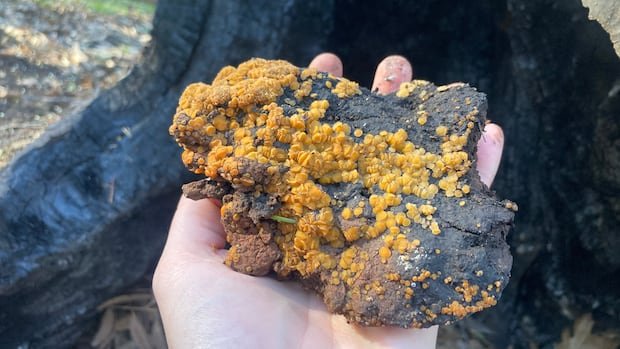
After a wildfire, a peculiar orange crust covers deadwood and the charred forest floor, giving the impression of a still-smoking, eerie landscape. However, instead of further devastation, this signifies a renewal process: tiny fungi are taking over the remains.
These peachy-orange fungi, known as pyronema, are a type of pyrophilous fungi, which means they thrive in fire-affected areas and play a crucial role in post-wildfire recovery. As wildfires become more frequent and intense due to climate change, the study of these organisms’ impact on fire recovery has gained significance.
According to Monika Fischer, a mycologist at the University of British Columbia (UBC), pyrophilous fungal spores remain dormant until triggered by a wildfire. Historically, these fungi have survived wildfires by adapting to the conditions, often initiated by lightning strikes.
Recent years have witnessed record-breaking wildfire seasons, surpassing the average annual burn size. The devastating impact of wildfires has underscored the importance of understanding the post-fire environment and the role of fungi and other organisms in the recovery process.
These fire-loving fungi survive extreme heat by residing in the soil, which acts as insulation. They play a crucial role in post-fire landscapes by consuming ashes, carbon, and other toxic byproducts, thereby helping in the restoration of the soil’s chemical composition.
Fungi like pyronema aid in stabilizing the soil post-fire, reducing the risk of erosion and landslides. Their filamentous structures, known as hyphae, contribute to soil stability and minimize the impact of post-fire environmental challenges.
Moreover, research suggests that these fire-loving fungi could have potential industrial applications due to their ability to break down pollutants. While the manipulation of these fungi for hastening forest recovery is yet to be tested, prescribed burns have shown promising results in enhancing the environment’s response to wildfires.
Overall, the study of fire-loving fungi and their role in post-wildfire rehabilitation holds promise for future ecosystem management and restoration efforts.

