
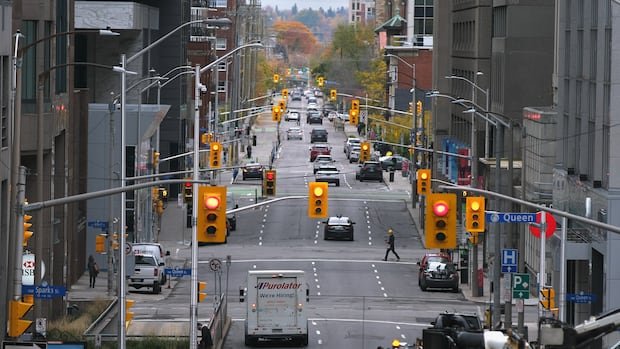


Every driver faces a split-second judgment call familiar to all.
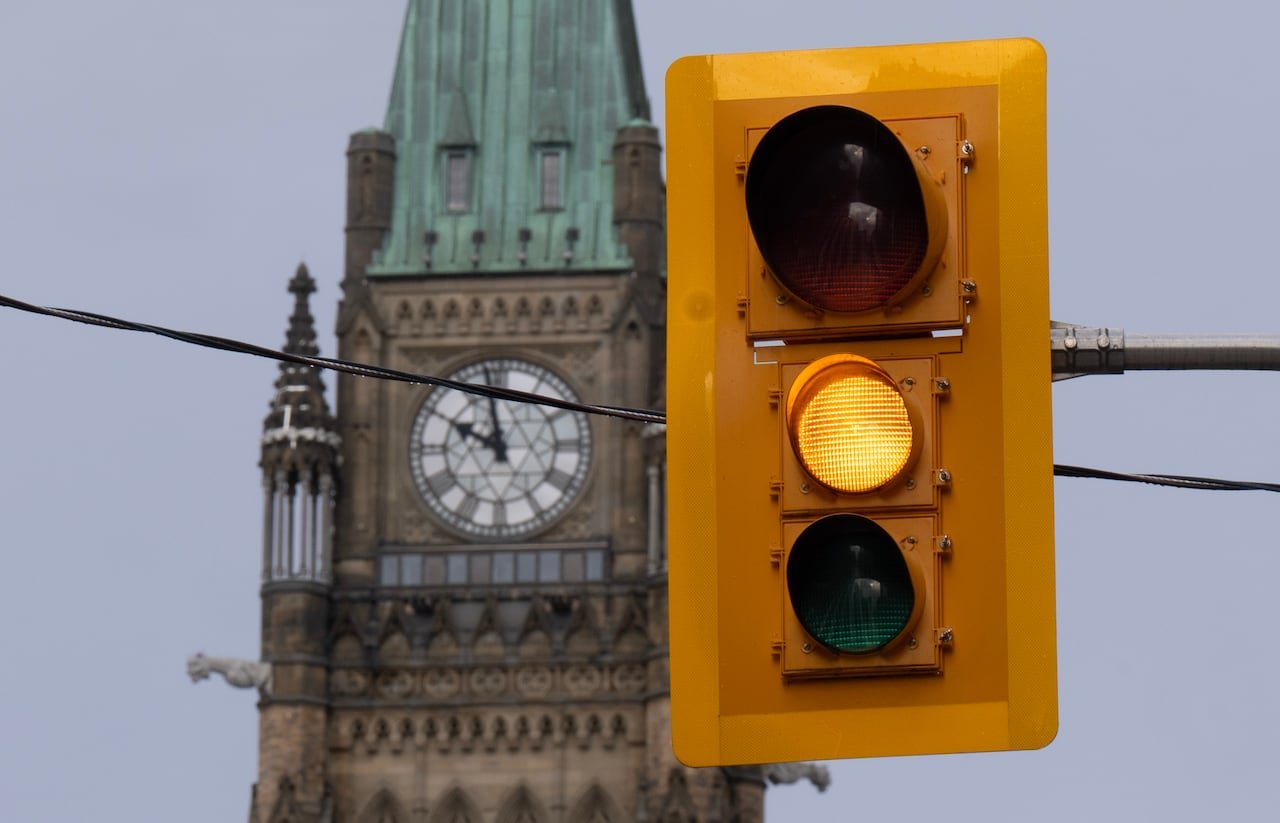
When the green light transitions to yellow, it prompts a mental calculation involving distance, time, speed, and the presence of tailgaters.
This decision-making process involves numerous factors. A miscalculation could lead to a red-light camera citation or, worse, a collision.
The individuals responsible for setting these yellow light durations, even the seemingly rushed ones, emphasize the scientific considerations behind traffic light programming. They take into account various driver behaviors at intersections.
Jodie Marcyniuk, overseeing traffic management at the city of Calgary, mentions that her team adheres to established guidelines for determining amber light durations and the “all red” period, in which all directions have a red signal simultaneously.

These recommendations, as per Marcyniuk, are grounded in fundamental physics principles taught in high school. “It’s about assessing the speed of approaching vehicles, their deceleration rates, and the road’s incline,” she explains. “It also factors in driver reaction time.”
Therefore, each intersection undergoes a bespoke analysis, considering elements like topography and speed limits to determine the appropriate duration for displaying the yellow light.
If Stopping on Yellow is Safe, Do So
Although the general rule is to halt when the light turns yellow, the rush of daily life can cloud this principle.
Marcyniuk advises drivers to stop if it is safe to do so when the yellow light appears.
“If stopping in time is not feasible and you must enter the intersection, you should do so while the light is still yellow,” she suggests. “What’s concerning is observing drivers who dangerously try to beat the light by entering too late.”
Standing at the bustling Brock and Taunton streets junction in Whitby, Ont., Travis Stocking discusses the importance of synchronizing lights to form traffic “platoons.”
“This involves a group of vehicles moving along the road, arriving at the green light simultaneously,” explains Stocking, a senior traffic analyst for the Regional Municipality of Durham, located east of Toronto.
However, platoons are dynamic, evolving as new vehicles join or external factors impede traffic flow.
“On paper, you can make it seem flawless, but in reality, it doesn’t always play out as modeled,” he tells Ideas producer Seán Foley.
Stocking highlights that in instances of maximum
