

The financial challenges faced by certain Ontario school boards have been highlighted by the province’s education minister. Recent estimates reveal that nearly two-thirds of the 72 boards are either projecting deficits for this school year or aiming to achieve a balanced budget.
While not all boards projecting deficits are in immediate trouble, the situation is unprecedented, as most boards typically operate without deficits in adherence to the Education Act regulations.
Education Minister Paul Calandra has criticized trustees of the five school boards under provincial control for failing to make appropriate financial decisions to maintain budget stability.
“It operates on a per pupil funding model,” mentioned Calandra during an interview on CBC Toronto’s Metro Morning on Sept. 5. “The majority of boards manage to maintain an efficient system with a surplus.”

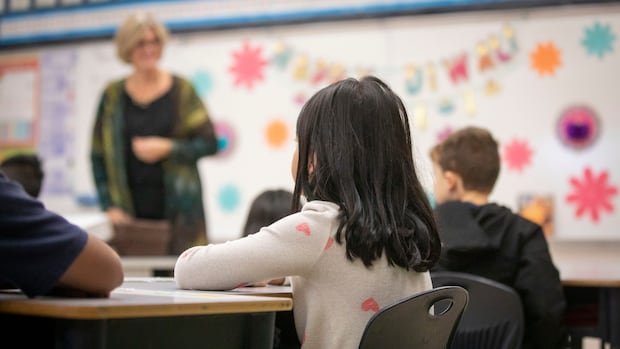
As students return to the classroom, Ontario’s Minister of Education Paul Calandra is considering eliminating oversight of school boards at the local level. He says it could free up resources, but it is being met with criticism from students, teachers and advocates.
Calandra is contemplating changes to the roles of trustees and plans to propose a strategy before the year ends.
An expert monitoring school boards suggests that the five boards under scrutiny—Ottawa-Carleton District School Board, Dufferin-Peel Catholic School Board, Thames Valley District School Board, and Toronto’s public and Catholic boards—are not isolated cases but part of a broader trend influenced by Ontario’s school board funding model.
“The widespread budget challenges across various school boards indicate a systemic issue rather than financial mismanagement,” stated Sachin Maharaj, an assistant professor at the University of Ottawa’s faculty of education.
Factors Contributing to Financial Strain
School board finances are intricate, involving multiple grants and extensive reporting to authorities. Each board must submit initial estimates, revise them, and present year-end financial statements.
For the 2025-26 school year, estimates from the 72 boards show that 25 approved deficit budgets, while 19 managed to balance their budgets after implementing challenging cuts. Surpluses among the remaining 28 boards were minimal compared to previous years, with projected surpluses mostly below $500,000 this school year.
As per a report by the Financial Accountability Office in 2021-22, 15 boards were in deficit while the rest recorded surpluses. A previous auditor general’s report highlighted that most boards had surpluses in 2019-20 due to stringent regulations.
According to Maharaj, the issues faced by boards post the 1990s loss of taxation powers under the Mike Harris government
