
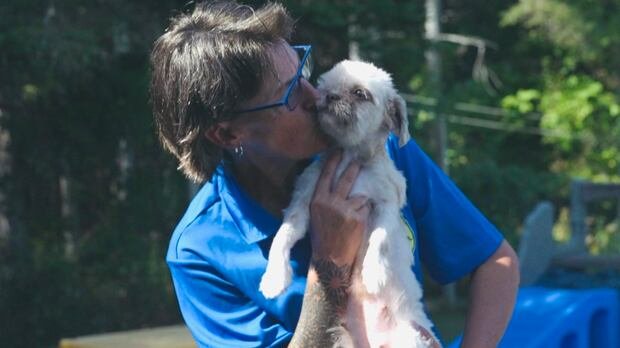
A canine named Elphie was among 65 animals taken by the New Brunswick SPCA from a household in northern New Brunswick last month. Elphie and her two offspring are now flourishing under the care of her foster parents, but their situation was starkly different just a month ago.
Stephanie Shipley, Elphie’s foster parent, shared that this case was one of the most severe hygienic issues she had encountered in her long history of fostering, having cared for over 830 animals. Elphie’s fur was so severely matted that she struggled to eat and move, with her paws entangled in feces and hair. Additionally, her lack of muscle mass made it challenging for her to walk and climb stairs, mirroring the dire state of the two surviving puppies from her litter of six.
Elphie’s emotional recovery was also a journey, as she initially displayed fear towards people, even those offering assistance. The first step towards her physical recovery was a complete shave, followed by exercises and a nutritious diet to regain strength and vitality.
Now, Elphie and her puppies are joyful and healthy, engaging in playful activities and exhibiting contentment. Shipley described Elphie’s progress, highlighting her ability to produce milk, navigate stairs effortlessly, and enjoy running and playing with ease.
Elphie’s remarkable transformation is just one of many similar stories unfolding across the province, reflecting the ongoing challenges faced by animal welfare organizations. The recent large-scale seizure of 58 Shih Tzus and seven cats in Gloucester County, while concerning, underscores the importance of public vigilance in reporting cases of animal neglect or abuse.
While no charges have been filed in the latest seizure, the NBSPCA continues its investigations diligently. Executive director Lesley Rogers emphasized the significance of public reports in facilitating swift interventions in such cases.
The dedicated efforts of individuals like Shipley, who have committed years to pet fostering, play a crucial role in rehabilitating animals rescued from distressing situations. Shipley emphasized the emotional toll of witnessing the suffering of these animals but finds solace in knowing they are on a path to recovery and eventual adoption into loving homes.
The collaborative response to large-scale animal rescues involves extensive vet assessments and the mobilization of foster homes, illustrating the collective effort required to address these complex challenges. Karen Overall, a veterinary behavioral medicine expert, highlighted the critical role of early intervention and proper care in ensuring the well-being and future of traumatized animals.
Overall stressed the necessity of providing appropriate support and care to these animals to mitigate potential long-term behavioral and emotional issues. She emphasized the importance of anti-anxiety medication and ongoing care to aid in the animals’ transition to a safe and nurturing environment.
In conclusion, Elphie’s story serves as a poignant reminder of the resilience of animals and the indispensable role of compassionate individuals and organizations in safeguarding their welfare and ensuring a brighter future for them.

