
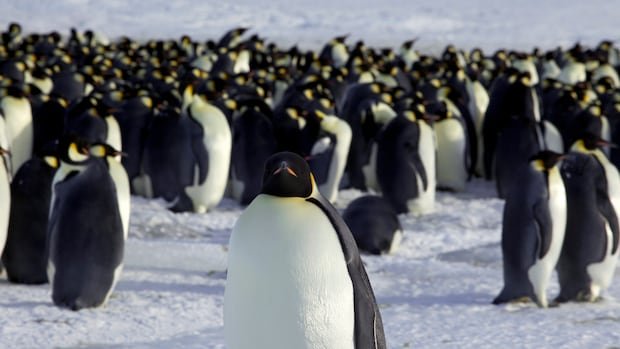
Emperor penguins, the largest penguin species, have been reclassified as endangered after a recent global evaluation of the impact of climate change on their environment and numbers. This shift in status reflects the broader repercussions of human-driven climate change on ecosystems in Antarctica, where sea ice levels have reached historic lows.
These penguins heavily rely on sea ice for nesting and molting, as it provides a safe platform for raising chicks and shedding feathers. However, the early breakup of sea ice due to rising global temperatures is posing a serious threat to their survival, as highlighted in an assessment by the International Union for Conservation of Nature (IUCN).
According to the IUCN specialist group member Philip Trathan, emperor penguins act as a crucial indicator species, revealing the effects of greenhouse gas emissions and climate change. Satellite data indicates a sustained decrease in the spring population of emperor penguins over the past decade, with an estimated 256,500 breeding pairs across 54 colonies in 2020, down nearly 10% from 2009 to 2018.
The exact number of non-breeding penguins and chicks remains uncertain due to the remote and challenging nature of the Antarctic region. The assessment warns that depending on the extent of global warming, emperor penguin populations could decline by 30 to 59% over the next three generations.
BirdLife International CEO Martin Harper emphasized the urgency of the situation, noting that penguins are already among the most vulnerable bird species globally. The reclassification of the emperor penguin to Endangered status underscores the accelerating impact of climate change on biodiversity and the looming threat of extinction.
In addition to the emperor penguin, the Antarctic fur seal has also been moved to the endangered category, experiencing a population decline of more than 50% from 1999 to 2025. The fur seal’s plight is linked to krill scarcity, driven deeper into the ocean by climate change, leading to reduced survival rates for seal pups and an aging population overall.
Previously listed as “Near Threatened,” the emperor penguin’s new “Endangered” status signifies a significantly heightened risk of extinction in the wild. The assessment calls for enhanced monitoring of the penguins’ sea-ice habitat through satellite surveys to better comprehend population dynamics and changes.

