
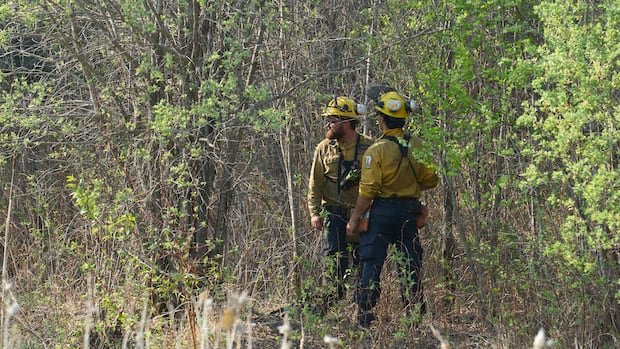
After extinguishing a wildfire, a dense smoke layer emerges from smoldering hot spots on the ground, releasing harmful chemicals into the air. This phase of fire suppression, according to a former wildland firefighter from Manitoba, poses a significant risk to air quality.
“The aftermath of battling wildfires often leaves you with blackened nasal discharge,” stated the firefighter, who requested anonymity due to concerns of reprisal for speaking out. Enduring such hazards is an inherent part of the job, they added.
With Canada witnessing longer and more intense wildfire seasons, experts caution that prolonged exposure to smoke can have detrimental effects. Christopher Pascoe, an associate professor at the University of Manitoba specializing in chronic respiratory diseases, emphasized the importance of minimizing smoke exposure.
Manitoba employs disposable masks and training to aid firefighters in coping with air pollution. However, mitigating the risks of wildfire smoke is not as straightforward as it may seem.
The former firefighter highlighted that during grueling 15-hour workdays involving physically demanding tasks, such as heavy lifting and navigating rough terrain, the air’s toxic elements were often overlooked.
While makeshift solutions like bandanas were used, Pascoe reiterated the potential health risks posed by wildfire smoke. Immediate effects may include breathing difficulties and throat irritation, while prolonged exposure without adequate protection could lead to serious respiratory issues.
Certain masks, such as respirators, offer effective filtration against harmful particles in wildfire smoke. However, the Manitoba Government and General Employees’ Union raised concerns about the practicality of wearing bulky face coverings during demanding firefighting operations.
Providing disposable N95 masks to interested firefighters, the province aims to offer protection against airborne pollutants. Pascoe highlighted the limitations of N95 masks, emphasizing the need for a proper fit to ensure effectiveness.
Utilizing oxygen tanks, a common practice among urban firefighters, is impractical in wildland firefighting due to weight and limited oxygen supply. Pascoe suggested respirators with cartridges as a viable alternative, though improvements are needed to address communication challenges and cartridge replacement frequency.
In Manitoba, efforts to safeguard firefighters from wildfire smoke are ongoing. While challenges like heat exhaustion and breathing difficulties have been raised by firefighters, the efficacy and comfort of respiratory protection gear remain a key consideration.
In British Columbia, strategies such as rotating crews in smoky areas and providing clean air spaces for rest aim to reduce smoke exposure. Drew Lichty, an occupational hygienist, emphasized the importance of respirators as a straightforward protective measure in combating wildfires.
As wildfire seasons become more severe, the need for enhanced respiratory protection becomes increasingly crucial. While not all firefighters may opt for advanced protective gear, having the option is essential in safeguarding their health amid escalating wildfire threats.

