
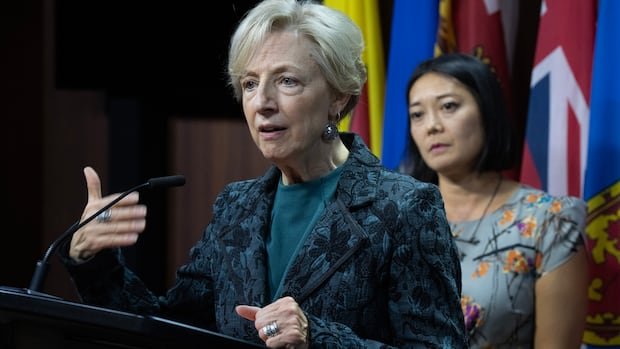
Canada’s standing in global gender equality within politics has declined significantly in the last 25 years, prompting calls for more proactive measures. Advocates stress the need for tangible actions rather than mere pledges, as highlighted by Shari Graydon from Informed Perspectives during a recent press briefing at Parliament Hill.
With women occupying less than one-third of parliamentary seats, Canada has dropped to 71st place in the Inter-Parliamentary Union’s ranking of female representation, a substantial decrease from its 28th position in 2000. As of August, women accounted for 30% of the House of Commons and 55% of the Senate.
Prime Minister Mark Carney acknowledged that the Liberal Party currently boasts the largest female caucus in Canadian history, comprising nearly 40% of elected Liberal Members of Parliament. Graydon emphasized the necessity for all political parties to adopt strategies implemented by other nations, such as gender quotas and electoral reforms. She cited Mexico, ranked fourth globally, which achieved gender parity through constitutional amendments and elected its first female president last year.
Graydon urged parties to commit to fielding a minimum percentage of female candidates, regardless of electoral competitiveness, arguing that this approach would elevate the caliber of male candidates selected. She contended that quotas, if effectively managed, could strengthen democracy and reinforce meritocracy.
A recent survey commissioned by Graydon’s group, conducted by Abacus Data, revealed that the majority of Canadians prioritize gender balance in Parliament, with 86% deeming equal representation crucial. Julie Savard-Shaw from The Prosperity Project emphasized the importance of childcare and flexible work arrangements in advancing women in corporate leadership, where female senior executives have seen a decline in numbers.
Liberal MP Chi Nguyen underscored the impact of childcare and remote work on political participation, urging Canada to draw lessons from global best practices. Nguyen emphasized the collective responsibility of all levels of government, political entities, civil society, and communities to address gender disparities in politics.
Nguyen also highlighted the deterrent effect of public harassment and hostile rhetoric in the House of Commons on women considering political candidacy. She called for ongoing dialogue with the public to ensure a conducive environment for elected officials to carry out their duties effectively, emphasizing the need for a respectful and supportive political landscape.

