
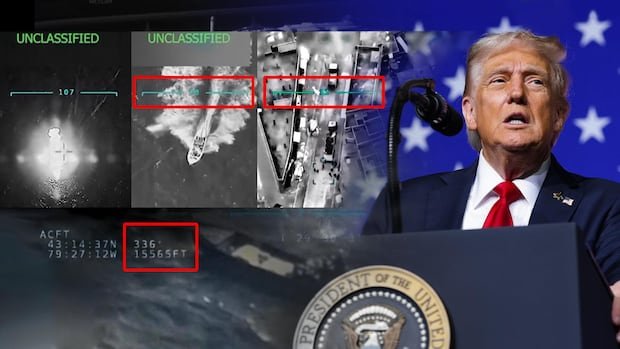
A modern Canadian-manufactured camera system was reportedly utilized in controversial U.S. operations against suspected Venezuelan drug vessels, as outlined in a report by Project Ploughshares, a non-governmental organization. The report suggested that Canadian technology, specifically the L3Harris WESCAM MX-Series sensor system, was involved in surveillance during the strikes.
Kelsey Gallagher, a senior researcher at Project Ploughshares, emphasized the need for enhanced human rights oversight due to concerns about the potential misuse of Canadian weaponry. The report highlighted that the U.S. military employed the Canadian-made sensor system to monitor and track boats targeted in the strikes.
The U.S. military executed a series of five strikes in the Caribbean, with the latest occurring recently, resulting in the deaths of at least 21 individuals. The legality of these actions has been questioned by experts, citing possible violations of international human rights and maritime laws.
The White House defended the strikes, claiming they were launched against a terrorist organization in self-defense and were consistent with the laws of armed conflict. However, critics have raised concerns about Canada’s involvement in potential war crimes through its arms export relationship with the U.S.
Global Affairs Canada is monitoring the situation closely, acknowledging the use of Canadian surveillance technology in the initial strikes. The MX-Series systems, manufactured by L3Harris WESCAM in Canada, are widely used in intelligence, surveillance, and reconnaissance missions by various operators, including military and law enforcement agencies.
Project Ploughshares’ analysis revealed similarities between the surveillance footage from the Venezuelan strikes and previously identified videos from MX-Series systems used in other conflict zones, such as Turkey and Ukraine. The distinct visual features and graphical overlays indicated the probable utilization of WESCAM MX-Series technology in the U.S. operations.
Experts have called for a reassessment of Canada’s arms export policies to prevent potential complicity in human rights violations. The investigation continues to uncover details about the involvement of Canadian technology in the controversial U.S. strikes against alleged drug boats.

