
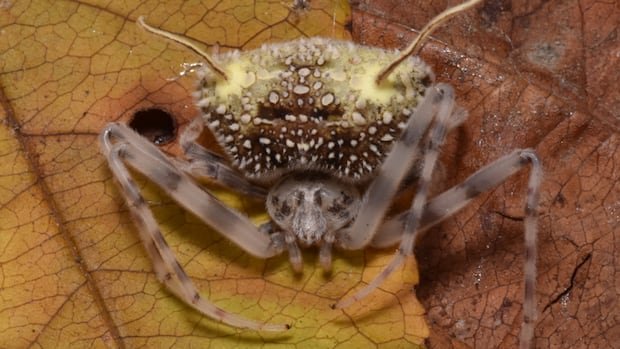
In a surprising encounter during a group tour in August 2025, scientist Alexander Bentley discovered a spider seemingly thriving under what appeared to be a lethal parasitic fungus. As a herpetologist based in Ecuador, Bentley encountered cordyceps, a notorious parasitic fungus known for its mind-altering effects on insects and arachnids.
Often referred to as “zombie fungus,” cordyceps manipulates its host to spread spores in a zombie-like manner, as described by the National Library of Medicine. Bentley initially mistook the spider, with two tubercle-like growths on its abdomen, for a victim of cordyceps. However, further investigation revealed that the spider belonged to a new species that mimics fungus traits.
The discovery of this spider species, detailed in the scientific journal Zootaxa, has sparked excitement among researchers. While some remain skeptical about the spider’s resemblance to cordyceps, Bentley and his colleague David Ricardo Díaz-Guevara confirmed the spider as a new species, named Taczanowskia waska.
Experts speculate on the purpose behind the spider’s fungus-like appearance. It could serve as a hunting tactic, allowing the spider to ambush prey unnoticed, or function as a defense mechanism against predators. The unique characteristics of this spider have intrigued scientists like Monika Fischer from the University of British Columbia, highlighting the significance of citizen science platforms like iNaturalist.
While the exact reason for the spider’s mimicry remains unclear, the discovery of this novel species stands out as a remarkable find in Bentley’s rainforest explorations. Described as the rarest and most extraordinary encounter in his career, Bentley’s exploration continues to unveil the mysteries of the natural world.

