
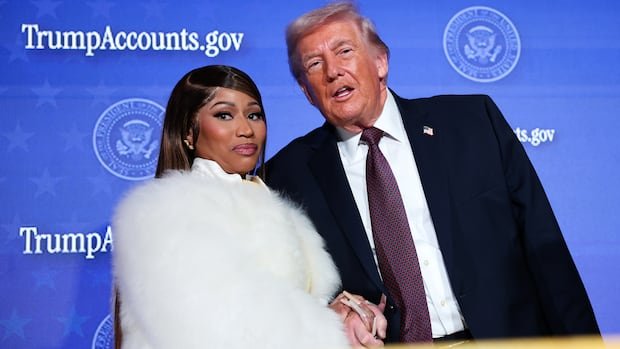
Rapper Nicki Minaj proclaimed herself as a devoted supporter of U.S. President Donald Trump during an event at the Treasury Department, where Trump was promoting his new financial offerings. Trump praised Minaj as the most successful female rapper in history and announced that she would be contributing significant funds to his initiatives.
Minaj expressed her unwavering admiration for Trump, stating that criticism from others only fuels her support for him. She then showcased a Trump gold card visa on social media, indicating her participation in a program that offers a pathway to citizenship for high-skilled foreign workers.
Despite her past criticisms of Trump, including denouncing his family-separation policy and expressing concerns about immigrant children, Minaj’s stance evolved over time. She opted not to attend the 2021 Met Gala due to vaccination requirements and shared controversial views on COVID-19 vaccines.
In subsequent years, Minaj openly aligned herself with Trump’s policies, particularly his stance on immigration and transgender rights. This shift in her political views drew both support and backlash from the public and her fanbase, especially considering her previous advocacy for LGBTQ rights.
While some celebrities, including musicians like Lil Wayne and Snoop Dogg, have also shown support for Trump, Minaj’s endorsement sparked significant controversy. Critics highlighted the contradictions in her previous positions and her current alignment with Trump, underscoring the complexities of public figures navigating political landscapes.
As Minaj’s political journey unfolds, observers note the impact of her shifting perspectives on her fanbase and the broader cultural and political discourse. Amidst debates over celebrity endorsements and political allegiances, the evolving narrative of figures like Minaj reflects larger societal tensions and power dynamics beyond the realm of entertainment.

