
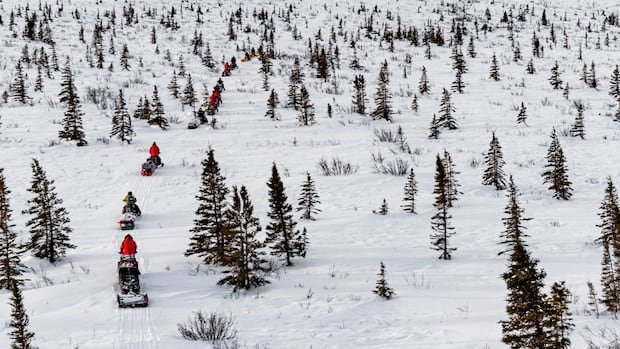
University of Alberta and the Canadian Department of National Defence have collaborated to create a small, battery-free sensor capable of monitoring vital signs and detecting frostbite in soldiers exposed to extreme cold conditions. This innovative sensor, developed through a partnership between Ashwin Iyer, a professor at the University of Alberta, and the Department of National Defence’s Innovation for Defence Excellence and Security program, has broader applications beyond military use.
In a recent interview with CBC’s Shannon Scott, Iyer discussed the initiative to leverage commercial telecommunications technology for military purposes. The University of Alberta’s expertise in developing SWaP-C (size, weight, power, and cost) systems positions them at the forefront of research in this field.
The envisioned application of these sensors involves equipping soldiers, particularly those operating in harsh environments like the High Arctic, with biometric devices to monitor key health metrics such as heart rate, respiration, and body temperature. By eliminating the need for traditional lithium-ion batteries, which struggle in extreme cold, the sensors can operate in temperatures as low as -70°C by harvesting energy from their surroundings.
The sensor technology, based on radio frequency identification, utilizes energy harvested from motion or radio waves to power the sensors and transmit vital data. Miniaturizing the antennas of these wireless systems required delving into decades of antenna research to ensure efficient functionality.
One of the primary objectives of the sensor is to detect frostbite early, potentially saving lives in critical situations. By monitoring core body temperature and extremities, the sensors can alert personnel to dangerous conditions, allowing for timely intervention. Beyond military applications, these sensors have the potential for broader use in emergency response scenarios and environmental monitoring, showcasing their versatility and adaptability across various settings and temperatures worldwide.

