
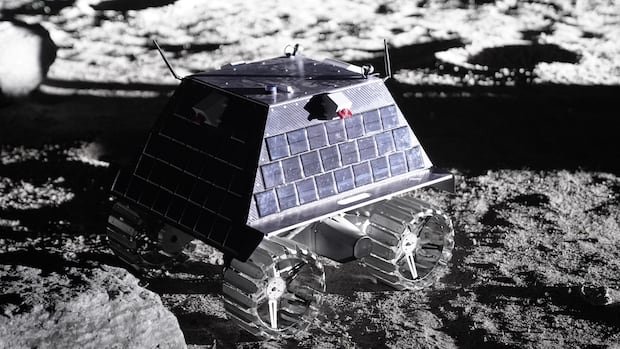
The Canadian Space Agency (CSA) has decided to halt its lunar rover mission outlined in the 2026-2027 departmental plan. Initially introduced in 2022, the mission aimed to deploy Canada’s inaugural rover, constructed by Canadensys, on the moon using a launch vehicle by Firefly Aerospace, a private U.S. company.
The cancellation was disclosed by space industry website SpaceQ, leaving Gordon Osinski, the principal investigator of the project, disheartened. Osinski, a planetary geologist from Western University, described the mission as a significant milestone for Canadian space exploration, expressing disappointment at the missed opportunity to land a rover in the moon’s south polar region, known for its water presence and its connection to the upcoming Artemis IV mission.
Artemis II, scheduled for an early April launch, will involve four astronauts, including Canadian Space Agency astronaut Jeremy Hansen, orbiting the moon. Osinski highlighted the unique aspect of the lunar rover mission, where the team would have operated the mission independently after deploying the rover, a departure from typical collaborative missions.
In response to the cancellation, the CSA assured its commitment to deep-space and lunar surface exploration, aiming to leverage existing investments for future projects. The lunar rover was part of the Lunar Exploration Accelerator Program (LEAP), fostering collaborations between academia and industry. The agency emphasized the transferable robotics mobility expertise gained from the project, potentially benefiting other missions like the lunar utility rover.
Despite the setback, Osinski reflected on the collective effort of the science team and expressed hope that their contributions would endure. Canadensys was unavailable for comment at the time of reporting.

