
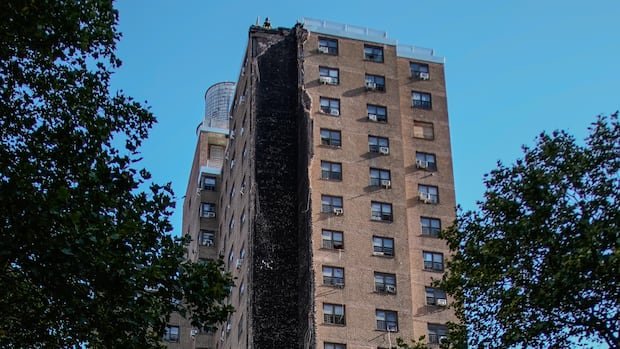
A towering brick chimney on the side of a New York City apartment building collapsed following an explosion on Wednesday, causing a cascade of debris to crash down to the ground. The bricks landed on a sidewalk and the building’s playground in the Bronx, enveloping the area in a cloud of dust. Thankfully, there were no reported injuries.
Bronx Borough president Vanessa Gibson expressed relief, calling the incident a narrowly averted disaster. Mayor Eric Adams confirmed the absence of injuries or fatalities from the chimney collapse emanating from the building’s boiler room. Authorities were alerted to the explosion shortly after 8 a.m., prompting an investigation into a potential gas leak.
The rubble heap was strewn with air conditioners that seemed to have been dislodged from apartment windows by the falling bricks. A rescue dog was seen scouring the massive brick pile at the building’s base in search of any potential victims buried beneath.
Witness Diamond Freeman recounted hearing a loud boom before witnessing the building’s side crumble. She described the scene as chaotic, with smoke filling the air. City officials responsible for public buildings declared the need for a thorough investigation to ascertain the cause of the collapse.
Department of Buildings Commissioner James Oddo indicated that work might have been ongoing on the boiler prior to the incident. Building inspectors, under the oversight of Emergency Management Commissioner Zach Iscol, are conducting evaluations on the building’s foundations and affected apartments to ensure their structural integrity. The mayor assured that the building would undergo repairs.
As a precautionary measure, some apartments were evacuated, and support services were arranged for residents at a nearby community center. With approximately half a million New Yorkers residing in aging buildings managed by the city’s housing authority (NYCHA), concerns linger over the condition of these structures, some of which date back to the mid-20th century. In 2019, a federal monitor was appointed to address persistent issues like lead paint, mold, and inadequate heating in NYCHA buildings. Upon completing a five-year term in 2024, the monitor, Bart Schwartz, highlighted the prevalent issue of the buildings’ deteriorating physical state.

