
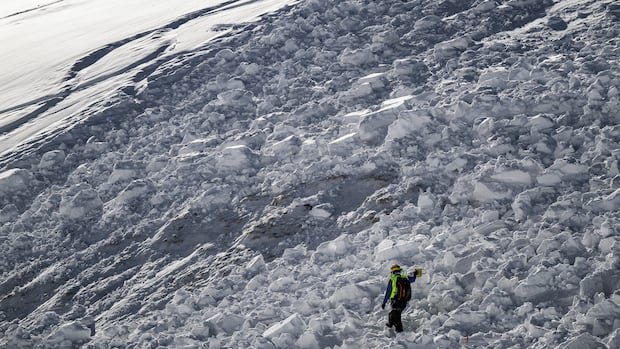
In February, five individuals lost their lives in separate avalanches in British Columbia and Alberta. During the same period, California and Utah witnessed over a dozen fatalities, with one incident claiming the lives of nine individuals. In Europe, spanning from Andorra to Slovakia, the ongoing season has already reported 125 avalanche-related deaths.
These tragic events underscore the constant threat posed by backcountry activities, even for experienced individuals equipped to handle avalanche risks. The unpredictable nature of avalanches further complicates the ability to anticipate their occurrence.
Experts interviewed by CBC News shed light on the formation of avalanches, the challenges in predicting them, and the potential impact of climate change on their severity. Simon Horton from Avalanche Canada defines an avalanche as a mass of snow in motion. Ethan Greene, of the Colorado Avalanche Information Center, emphasizes the need for a strong layer atop a weak layer to trigger an avalanche.
Nicolas Eckert, associated with Université Grenoble Alpes and INRAE, explains how the snowpack undergoes continuous changes due to precipitation and temperature variations, creating conditions that may favor avalanches.
Avalanches come in various forms, from loose sluffs to heavy, cohesive slabs, each with distinct triggers. ‘Slab’ avalanches, according to Horton and Greene, pose the greatest risk as they involve large chunks of snow breaking off mountainsides.
The challenge in accurately predicting avalanches lies in the unique characteristics of each event. Despite advancements in data collection, the variability of snowpacks within short distances makes forecasting an intricate blend of art and science.
Climate change could potentially influence avalanches, although the exact impact remains uncertain due to the complex interplay of weather patterns. Changes in precipitation and snow levels, particularly at different elevations, may contribute to the formation of weaker snowpack layers.
Experts stress the importance of proper preparation, including staying informed with local forecasts, carrying essential gear, and undergoing avalanche safety training. Additionally, establishing clear rules within groups and cultivating a proactive mindset can help mitigate risks associated with backcountry activities.

