
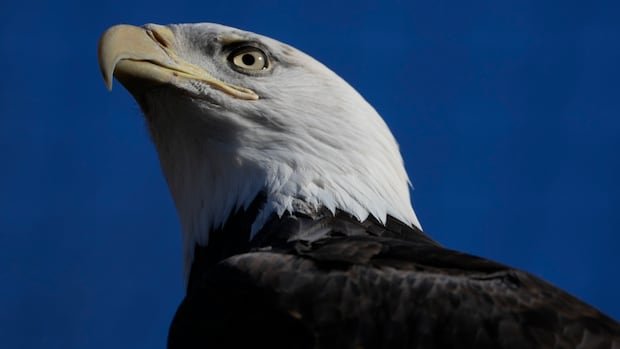
Five individuals are currently facing a total of 43 charges at the federal and provincial levels, including offenses related to hunting birds of prey and possessing wildlife unlawfully for trafficking purposes, as reported by the Alberta Fish and Wildlife Enforcement Services (FWES). Among the accused is an American fugitive who had been residing on the Stoney Nakoda First Nation near Calgary since fleeing the United States in 2024. Reports received by FWES indicated that the American had been involved in the killing of eagles on the lands of Stoney Nakoda and Eden Valley First Nations in the previous year.
An investigation was initiated in March following reports of the American and another individual poaching eagles and hawks from a vehicle near Cochrane, Alberta. The accused parties are now facing a total of 34 charges under Alberta’s Wildlife Act and nine under the Criminal Code of Canada. The charges include offenses such as hunting wildlife outside of open seasons, illegal possession and trafficking of wildlife, and negligent transportation and storage of firearms.
According to the U.S. Attorney’s Office for the District of Montana, the American was one of two individuals facing charges for trafficking bald and golden eagles that were killed on the Flathead Indian Reservation. Of the four other individuals facing charges in Canada, two reside in Mînî Thnî and the remaining two in Calgary.
Public Safety and Emergency Services Minister Mike Ellis condemned poaching as a crime that deprives the province of its wildlife, which holds significant importance for many Albertans. Search warrants executed on the vehicles and residences of the American and another suspect by FWES led to the discovery of multiple freshly removed eagle parts, including feet with talons, feathers, blood, and other raptor components, alongside unsecured firearms.
In a separate operation conducted by FWES, three suspects were found selling various items to undercover officers, including a bald eagle feather headdress, black bear claw necklaces, and a raptor talon dance stick. Iskotoah’ka William Wadsworth, a Blackfoot researcher from the Kainai Nation, highlighted the spiritual significance of eagles to Indigenous people, emphasizing their role in ceremonies and as a source of spiritual guidance. The harvesting of raptors is restricted by laws, which poses challenges for Indigenous communities requiring eagle parts for cultural and ceremonial purposes.
Alberta is home to diverse birds of prey, such as eagles, hawks, falcons, and owls, all protected under the Wildlife Act from hunting and harassment. Indigenous individuals can seek raptor parts and feathers for spiritual or cultural use through the provincial government, with strict regulations against selling or trading them.
Colin Weir, managing director of the Alberta Birds of Prey Foundation, noted the recurrent issue of poaching birds of prey in southern Alberta, targeting species like bald and golden eagles, Swainson’s hawks, and red-tailed hawks. He expressed concern over the high demand for feathers and feet of these birds, making them vulnerable to poaching. The poaching of birds of prey is a persistent problem across North America, with both native eagle species in Alberta being prized by poachers. Bald eagles are particularly susceptible due to their tolerance of human presence, while golden eagles are rarer and more elusive, requiring protection for their recovery as sensitive species with low population densities in the province.

