
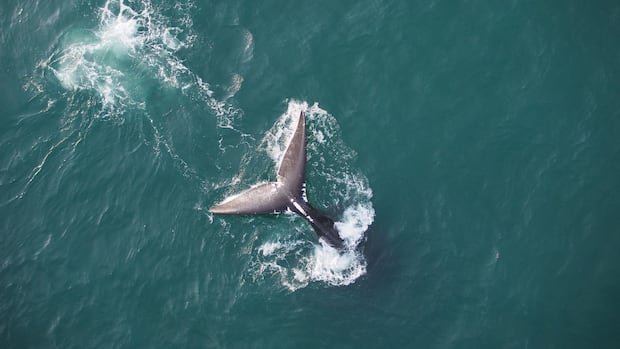
The United States is considering revising regulations aimed at preventing ships from colliding with the critically endangered North Atlantic right whale off the East Coast. The National Oceanic and Atmospheric Administration (NOAA) of the country has hinted at potential changes harnessing modern technology to avoid ship-whale collisions while accommodating industry requirements.
In a statement on March 4, Neil Jacobs, the NOAA administrator, emphasized that the proposed action aligns with the President’s agenda of embracing advanced technologies, supporting American businesses, and enhancing regulatory efficiency. Seeking external feedback, the agency aims to streamline the existing speed restrictions imposed on larger vessels since 2008 to alleviate unnecessary regulatory burdens.
Despite the emphasis on technology, experts caution that current advancements are insufficient to reliably avert whale collisions. Sean Brillant, a marine program coordinator at the Canadian Wildlife Federation, highlighted the necessity of exploring innovative solutions while maintaining current regulatory measures. He cited technologies such as satellites, thermal imaging, and surveys as valuable for whale detection but insufficient in predicting their movements to prevent accidents.
Moira Brown, the director of science at the Canadian Whale Institute, acknowledged the potential of infrared cameras on ships to spot whales in the vicinity but noted limitations in their effectiveness due to a restricted field of vision. Brown advocated for combining new technologies with existing speed regulations for enhanced protection, expressing concerns that altering the rules could impede conservation efforts significantly.
A 2020 report by NOAA evaluated the impact of speed restrictions, indicating a reduction in whale mortalities post-implementation but calling for enhanced enforcement and broader application to smaller vessels. Captain Bob Peacock, a veteran ship pilot, emphasized the importance of adhering to speed limits and effective communication to prevent collisions. While recognizing the value of drones in whale detection, Peacock stressed the irreplaceable role of human observation and collaboration with local experts to navigate whale-prone areas safely.
Fisheries and Oceans Canada reported four North Atlantic right whale deaths from ship collisions in 2017, contributing to the decline of the species, with entanglement in fishing gear and vessel strikes as primary causes of mortality. With the North Atlantic right whale population dwindling to less than 400, conservation efforts remain crucial to safeguarding this endangered species.

