
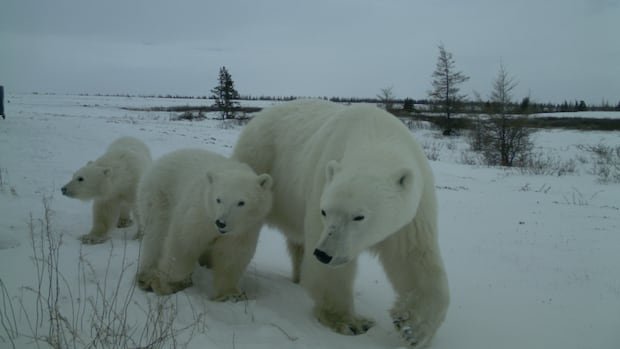
In Canada’s northern regions, an apparent rise in polar bear sightings near communities has sparked concerns among residents. Experts initially linked this behavior to the bears’ hunger, assuming they were forced ashore due to diminishing sea ice and potentially seeking food, including humans. However, a recent 11-year study conducted by researchers from the University of Saskatchewan and University of Manitoba challenges this assumption.
The study, led by Douglas Clark from the U of S School of Environment and Sustainability, revealed unexpected findings. Contrary to popular belief, it wasn’t just emaciated bears venturing closer to human settlements. The research, based on extensive data collected in Wapusk National Park near Hudson Bay, indicated that prolonged off-ice periods increased the likelihood of polar bears—regardless of age, sex, or body condition—interacting with people.
Parks Canada’s observations of polar bears showing interest in new field camps prompted the study to understand the bears’ behavior better. Clark, a seasoned polar bear scientist with over three decades of experience in Hudson Bay, and his team meticulously analyzed more than 500 polar bear visits over the study period. Their findings, recently published in Arctic Science, emphasized that the bears’ proximity to humans was primarily a consequence of climate change-induced sea ice reduction, rather than deliberate interactions for food.
While some bears exhibited signs of hunger, the research indicated they were not actively hunting humans. Clark highlighted that extremely underweight adult males posed the most danger during severe nutritional stress situations. Nevertheless, there was no evidence to suggest that hunger drove bears en masse towards human settlements.
Assistant professor Alex Crawford from the U of M emphasized that as sea ice continues to diminish, polar bears are likely to spend more time on land, potentially increasing human encounters. However, the study concluded that healthier bears were not more inclined to seek out humans for sustenance. Crawford echoed Clark’s sentiment, underscoring the inherent danger posed by starving polar bears when encountering humans.
The research team plans to monitor polar bear behaviors further to assess potential long-term impacts on their habitat and food sources. Understanding these dynamics is crucial in addressing the changing interactions between polar bears and human populations in the region.

