
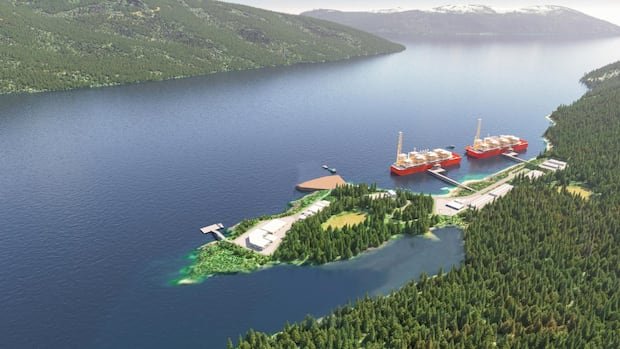
The Ksi Lisims LNG terminal project, located approximately 80 kilometers north of Prince Rupert, British Columbia, has been granted a provincial environmental assessment certificate, marking a significant milestone for the large-scale initiative despite opposition from environmentalists and local hereditary chiefs.
Nisga’a Nation and Western LNG have proposed the Ksi Lisims project as a floating production facility capable of producing 12 million tonnes of liquefied natural gas (LNG) annually, with an estimated cost exceeding $10 billion and operations scheduled to commence in late 2028 or 2029.
The provincial announcement on Monday confirmed the approval of the environmental assessment certificate following a nearly four-year review process conducted by the Environmental Assessment Office (EAO). The project is mandated to adhere to a series of legally binding conditions outlined in an approval document to address and minimize its impact on the nearby community.
Despite facing opposition from various environmental groups and Gitanyow hereditary chiefs, who express concerns about potential environmental harm, including threats to vital salmon habitat, the project will incorporate measures to mitigate impacts on wildlife habitat and establish reporting mechanisms for First Nations and mariners to address any issues.
The provincial government emphasized its commitment to addressing First Nations’ apprehensions related to marine shipping by urging federal ministers responsible for the environment, defense, transport, and fisheries to consider these concerns in their decision-making process.
The project is expected to create employment opportunities, with around 450 workers during construction and a peak of approximately 800 workers. Post-commissioning, Ksi Lisims LNG aims to maintain a permanent workforce of 150 to 250 employees for a minimum of 30 years, offering positive economic impacts on surrounding communities.
Consultations with ten local First Nations informed the decision to issue the certificate, with some, such as Kitselas First Nation and Gitga’at First Nation, supporting the approval, while others like Metlakatla First Nation and Kitsumkalum First Nation withholding consent.
Despite ongoing efforts to address First Nations’ concerns, Environment Minister Tamara Davidson and Energy Minister Adrian Dix acknowledged unresolved issues and committed to continuous consultation to assess the project’s impacts on ecosystems and communities in the region.
Critics, including environmentalists and hereditary chiefs, have raised objections to the project, citing financial backing from Blackstone Inc., a major American asset manager associated with U.S. President Donald Trump. Concerns also extend to the project’s competitiveness on a global scale and potential economic risks associated with a nationwide LNG expansion.
Environmental groups have highlighted the challenges of Canadian LNG competitiveness and emphasized the need to transition towards clean energy solutions to reduce costs, drive innovation, and create sustainable job opportunities in British Columbia.
The Ksi Lisims LNG project continues to face scrutiny and debate as stakeholders navigate the complexities of environmental sustainability, economic viability, and community engagement in the evolving energy landscape.

