
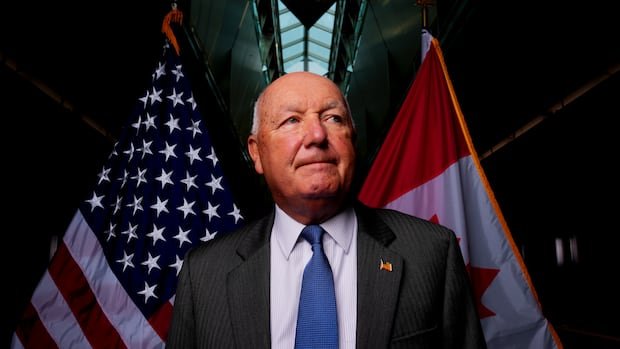
Canadian politicians and experts are expressing opposition to the dissatisfaction voiced by U.S. ambassador Pete Hoekstra regarding the surge of anti-American sentiment in Canada following the imposition of tariffs by U.S. President Donald Trump.
Flavio Volpe, president of the Automotive Parts Manufacturers’ Association and a member of the prime minister’s Canada-U.S. relations council, likened the situation to provoking a reaction from a provoked dog. He criticized Hoekstra, suggesting he lacks an understanding of effective Canada-U.S. diplomacy.
Hoekstra, during an event at the Halifax Chamber of Commerce, lamented the lack of enthusiasm among Canadians for the American-Canadian relationship, attributing it to what he deemed an anti-American campaign during Canadian elections.
Volpe remarked that Hoekstra’s remarks appeared intentional, geared more towards an audience in Washington rather than nationwide. He emphasized the need to disregard Hoekstra’s rhetoric.
Novelist Stephen Marche concurred with Volpe’s sentiments, branding Hoekstra as an individual who undermines U.S.-Canadian relations. He advocated for ignoring Hoekstra’s divisive commentary.
Conservative House Leader Andrew Scheer highlighted the expected negative reactions from Canadians to foreign actions such as tariffs or annexation proposals. He emphasized Canada’s distinct identity and proud history, beyond merely being different from the U.S.
Hoekstra criticized Canadian Finance Minister François-Philippe Champagne’s use of “war” rhetoric in economic discussions, deeming it perilous. Champagne, in response, acknowledged the severe impact of tariffs on various Canadian sectors.
Hoekstra defended Trump’s tariffs by pointing out improved trade positions, which Volpe disputed, highlighting the positive economic climate before the tariff implementations.

