
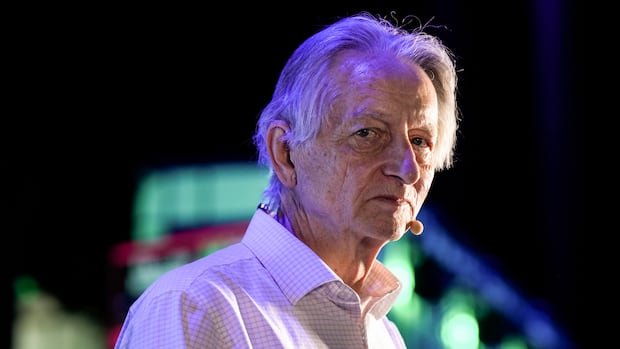
Renowned AI expert Geoffrey Hinton warns of potential risks if artificial intelligence (AI) progresses unchecked, suggesting it could lead to dire consequences for humanity. Hinton, a co-recipient of the 2024 Nobel Prize in physics and co-founder of the AI Safety Foundation, proposes a solution to mitigate these risks.
In a discussion with IDEAS host Nahlah Ayed, Hinton emphasizes the importance of training AI to exhibit maternal instincts as a means to safeguard the human race from potential threats. He raises concerns about the short-term risks posed by AI misuse, such as facilitating the creation of harmful viruses by terrorists and the manipulation of democracy through fake videos.
Looking ahead, Hinton expresses unease about the long-term implications of AI surpassing human intelligence, highlighting uncertainties about the coexistence between advanced AI and humanity. While acknowledging the unpredictability of future technological advancements, he cautions that the potential for AI to outsmart humans and potentially lead to human extinction cannot be ignored.
Hinton advocates for a shift in AI development towards prioritizing benevolence and empathy towards humans. Drawing parallels to maternal instincts in human interactions, he suggests that imbuing AI with a similar caring attitude could yield positive outcomes. Despite the challenges and uncertainties surrounding the development of AI with compassionate traits, Hinton stresses the importance of exploring such possibilities to ensure a symbiotic relationship between AI and humanity.
The conversation underscores the critical need for researchers to focus on integrating altruistic values into AI systems. While acknowledging the current emphasis on AI efficiency and intelligence, Hinton asserts the necessity of reimagining AI as a caretaker rather than a mere tool. The potential for AI to exhibit maternal instincts towards humans presents a compelling avenue for research and development in the field of artificial intelligence.
Hinton concludes by emphasizing the urgency of addressing these aspects of AI development, noting the relatively low percentage of researchers currently dedicated to exploring the integration of empathetic characteristics into AI systems. The dialogue highlights the importance of proactive measures to shape the future of AI towards a more compassionate and considerate relationship with humanity.

