
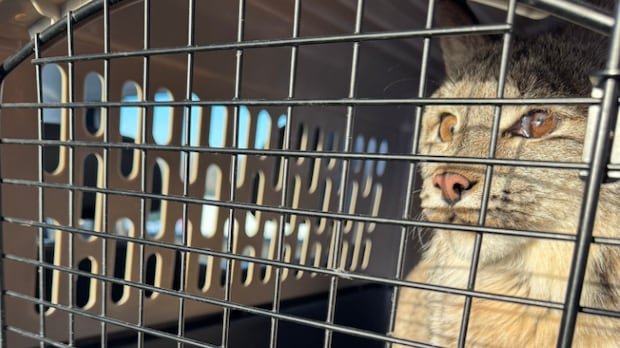

After being rescued in Manitoba, a lynx named Lumi received a new diagnosis during a visit to Ontario.
Lumi was discovered near Swan River in late August, injured and surrounded by dogs, leading rescuers to assume her mother was either injured or deceased.
The Wildlife Haven Rehabilitation Centre in Ile des Chênes, located about 20 kilometers southeast of Winnipeg, took in the lynx for care. They determined that due to a permanent eye injury, Lumi could not be released back into the wild.
In October, Lumi’s condition worsened as she began experiencing severe seizures, according to Zoe Nakata, the executive director of Wildlife Haven.
Nakata mentioned that despite winning their hearts, the seizures posed a significant risk to Lumi’s health and well-being.
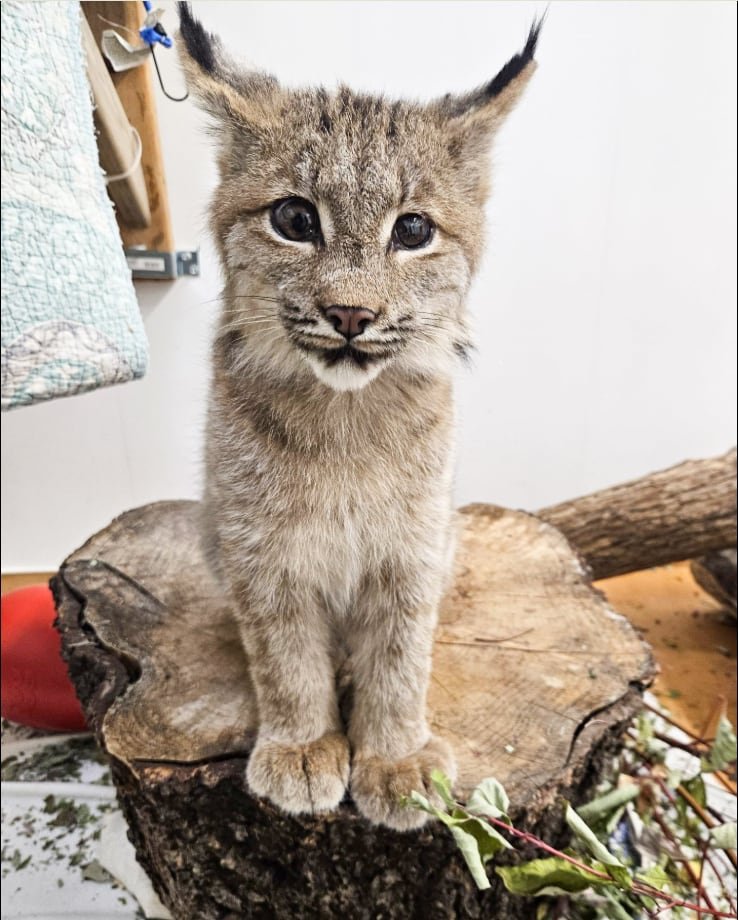
The Wildlife Haven staff administered medication to manage Lumi’s seizures, but the underlying cause remained unknown. Consequently, a decision was made to conduct an MRI scan and a comprehensive neurology assessment.
Nakata stated, “Performing such procedures on a lynx is quite rare. It is not a common occurrence, especially in Manitoba.”
Subsequently, Lumi was transported to Guelph, Ontario, at the end of January, accompanied by Nakata and another Wildlife Haven team member. In Ontario, with the assistance of the National Wildlife Centre and the Ontario Veterinary College, Lumi underwent an MRI, neurology assessment, and blood tests.
Although collaborations with organizations outside the province are not uncommon for Wildlife Haven, sending an animal out of province for specialized testing was a first, as mentioned by Nakata.
The tests indicated that Lumi’s seizures were likely a result of trauma-induced epilepsy, stemming from a brain injury sustained during the eye incident.
Nakata explained, “This condition has been observed in other mammals, such as dogs. Fortunately, it is not progressive, which is a positive aspect.”
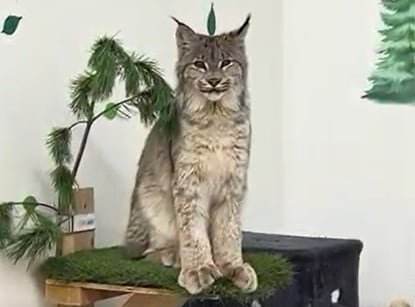
Lumi will require lifelong medication to manage her seizures. However, identifying the root cause enables the team to offer enhanced care for the lynx, Nakata emphasized.
In the wild, lynx can live up to 14 years, whereas in captivity, their lifespan can extend up to 26 years.
Sherri Cox, the director of the National Wildlife Centre and a veterinarian involved in Lumi’s examinations, expressed the uniqueness of having the lynx under their care.
Cox mentioned that lynx sightings are rare at their facility, as bobcats are more prevalent in southern Ontario. Although lynx and bobcats are closely related, lynx are larger, sport longer ear tufts, and are typically found farther north.
“Encountering these species is not a regular occurrence for us,” Cox stated during a video call. “It is truly a pleasure to be able to observe them.”
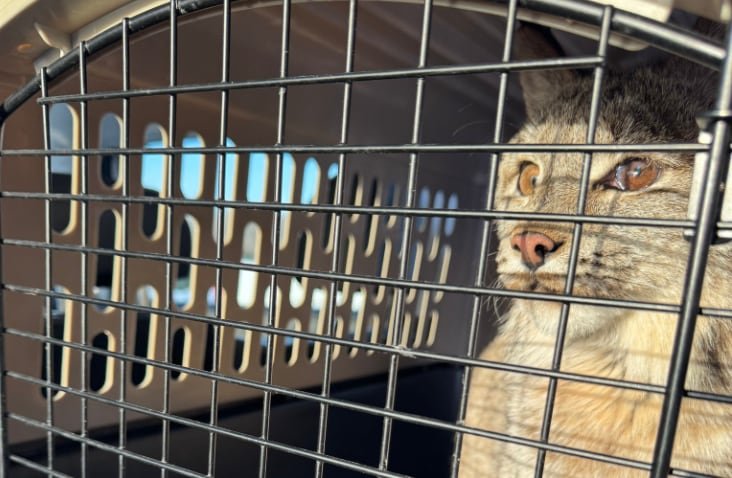
Cox commended Lumi as a “wonderful patient” with a calm demeanor, emphasizing the importance of
