
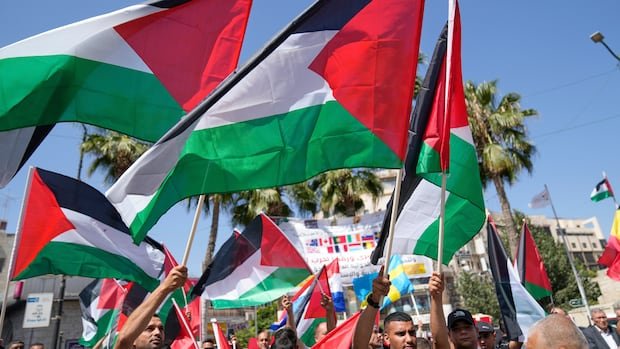
Last Sunday, Prime Minister Mark Carney made an announcement that Canada would officially acknowledge the statehood of Palestine. Recently, several countries including Canada, Australia, Portugal, the U.K., and France have joined the majority of nations in the United Nations, totaling 147 out of 193, in recognizing Palestine as an independent state.
Carney cited the current Israeli government’s explicit policy of obstructing the establishment of a Palestinian state as the reason for Canada’s decision to recognize Palestine. The move by Canada was positively received by officials from both the Palestinian Authority and Hamas, with the latter connecting the announcement to the aftermath of the deadly attacks on Israel that occurred on October 7, 2023.
In response, Israel swiftly condemned the recognition announcements, with Israel’s UN ambassador, Danny Danon, dismissing them as “empty declarations.” Prime Minister Benjamin Netanyahu criticized the move, stating that it only serves to reward terrorism. Netanyahu firmly stated that a Palestinian state would not be allowed to exist west of the Jordan River.
Despite Netanyahu’s rejection of a two-state solution, the broader recognition of a Palestinian state raises questions about its significance. Is it merely symbolic, or could it have practical implications for Palestinians? CBC News delves into these inquiries.
The concept of statehood is not straightforward, according to experts in international relations. The Montevideo Convention, established in 1933, outlines four criteria for statehood: a permanent population, defined territory, government, and the ability to engage in relations with other states. However, the recognition of statehood is subjective, as a state is typically established when another state acknowledges it as such.
The Palestinian territories’ status has sparked discussions among international relations experts regarding their alignment with the 1933 convention criteria. While certain aspects remain disputed, such as borders and governing entities, a Palestinian state fulfills the requirement of a permanent population. The West Bank, Gaza Strip, and East Jerusalem are widely viewed as the main territories comprising a Palestinian state, despite ongoing disputes and control issues.
The recent endorsements of a Palestinian state by countries like Canada are perceived by some experts as largely symbolic. Although these acknowledgments may enhance Palestinians’ standing in certain international forums, they are unlikely to bring about significant changes in diplomatic relations. However, the growing support for Palestinian statehood signifies a shift in international opinions and could potentially lead to revised bilateral relations with Israel, including the possibility of establishing new treaties and embassies.
Recognizing Palestine’s statehood also lays the groundwork for reevaluating existing agreements with Israel to ensure compliance with obligations towards the newly recognized state. Canada, for instance, could consider establishing an embassy in Ramallah, West Bank, and appointing an official ambassador, fostering a more formal diplomatic relationship between the two states.

