
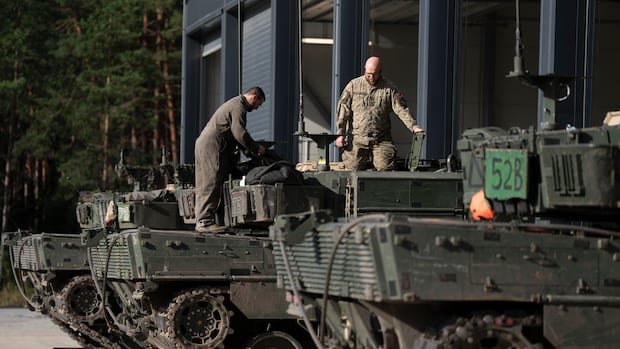
The House of Commons committee was informed on Thursday that the Canadian Army is facing a shortage of vehicles to adequately support both the brigade stationed in Latvia and a similar-sized training exercise held in Canada. Maj.-Gen. Robert Ritchie, the director of the strategic joint staff, highlighted that over 400 vehicles have been deployed for the NATO deterrence mission in Latvia, which surpasses the available vehicle inventory in Canada due to a deliberate shift in training methodologies.
Ritchie emphasized the importance of utilizing the same vehicles for pre-deployment training in Latvia to ensure familiarity and confidence among personnel. Despite not specifying the extent of the vehicle shortage in Canada and its impact on other missions, concerns have been raised by defense analysts and observers regarding the adequacy of vehicle resources for concurrent operations.
Critics have raised issues with the relocation of combined arms training from Wainwright, Alta., to Latvia, citing budget reallocation within the Department of National Defence and overall funding constraints as contributing factors. Ritchie defended the decision, stating that training in Latvia provides soldiers with practical experience in frontline conditions, contributing to overall preparedness.
Internal documents obtained by CBC News revealed challenges with on-the-ground training in Latvia during recent deployments, necessitating a more theoretical approach to certain exercises. Additionally, a shortage of spare parts has led to the parking of vehicles, including main battle tanks, further complicating operational readiness.
Ritchie acknowledged the spare parts shortage and highlighted the government’s financial commitment to address the issue. Despite ongoing challenges, efforts are underway to expedite spare parts orders and restore the army’s reserve of essential components.

