
Canada’s forest fires are becoming more severe and prolonged, as per a recent analysis of fire data spanning over six decades by the Canadian Forest Service. The study reveals that the escalation is not due to an increase in the number of fires but rather a smaller number of larger wildfires that now consume more land than before, aligning with previous findings by federal scientists.
A study released in 2019 by Natural Resources Canada indicated a steady rise in wildfire activity in Canada since the mid-20th century, attributed to escalating temperatures and extended fire seasons. While some regions displayed noticeable increases in burned areas, others remained stable or even exhibited a decline. Human-induced fires were thought to be decreasing due to prevention measures, and although significant fires were growing in size, they had not yet dominated the national landscape.
An updated report, recently published in the Canadian Journal of Forest Research, extends the analysis until 2024, using enhanced satellite mapping and data from nine additional fire seasons, including notable years such as 2021, 2023, and 2024. The research indicates a continual expansion in the area affected by wildfires across almost all Canadian eco-zones, even in traditionally lower-risk regions like the Pacific Northwest and Atlantic Canada, previously considered less prone to wildfires due to wetter conditions.
The study highlights that the largest wildfires are now responsible for a significant portion of the damage, with lightning remaining the primary cause of fires, while human-induced ignitions have been on the rise since the early 2000s. This trend is attributed to the hotter and drier conditions that make fire control more challenging, rather than a failure in policy.
Chelene Hanes, a research scientist at the Canadian Forest Service, emphasized that the increase in human-caused fires, particularly larger ones, is due to the heightened dryness of fuels. She noted that as wildfires reach unprecedented scales and intensities, traditional firefighting strategies are limited, necessitating a focus on containment and protection rather than fire suppression.
The impact of these large wildfires is becoming increasingly evident on a national scale, with recent wildfire seasons showcasing the consequences of these changing fire dynamics. For instance, in 2021, extreme heat and record temperatures fueled wildfires in British Columbia, leading to the destruction of the village of Lytton, which had just recorded Canada’s highest temperature on record at 49.6°C.
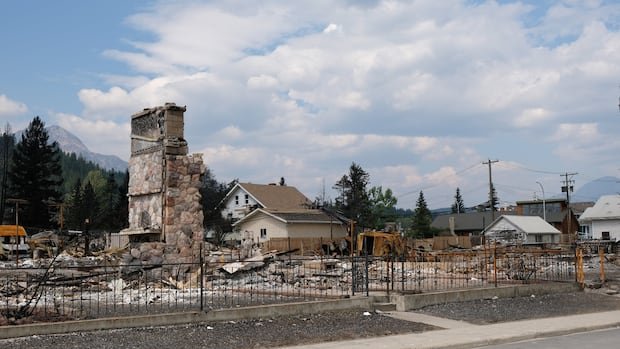
The severity of the 2023 wildfire season, scorching over 15 million hectares, was unprecedented in Canadian history, causing mass evacuations and significant air pollution both in Canada and neighboring regions. Similarly, in 2024, a wildfire in Jasper National Park in Alberta resulted in the evacuation of thousands, the destruction of numerous structures, and substantial economic losses, ranking as one of the country’s most expensive disasters that year.
The evolving wildfire landscape is also impacting Canada’s insurance sector, with insurers noting a surge in wildfire risk that is reshaping their approach to losses, premiums, and housing decisions nationwide. Insurance losses from wildfires in Canada surged from an average of $70 million annually between 2005 and 2014 to approximately $750 million in the most recent decade, prompting adjustments in coverage pricing for high-risk areas to manage escalating risks effectively.
Insurers are adapting their policies and pricing strategies in response to the heightened wildfire risk, ensuring that coverage remains available even in high-risk regions. The industry emphasizes the need to accurately assess and price risk, underscoring the importance of proactive risk management in the face of escalating wildfire threats within Canada.
[End of Rewritten Article]

