
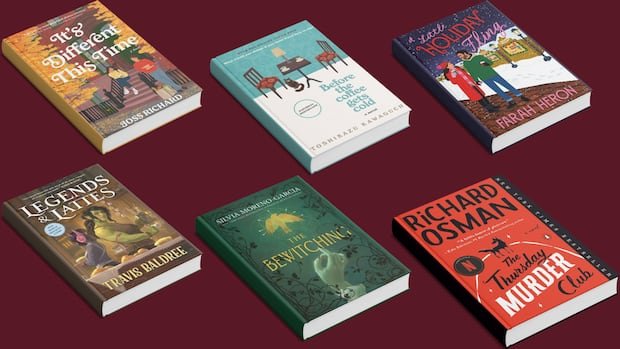
In the realm of literature, the term “cosy” traditionally denotes mysteries and romances that are devoid of explicit language, violence, or sexual themes. These tales typically emphasize well-developed characters, charming settings, and lower-level conflicts.
If you’ve browsed a bookstore recently, you may have encountered a display showcasing cosy reads like Joss Richard’s “It’s Different This Time” or Richard Osman’s “The Thursday Murder Club.” These cosy narratives are often recommended for the autumn and winter seasons and have gained popularity in recent times.
While cosy mysteries and romances are not new, the term “cosy” is now being applied to various genres beyond its traditional scope. This includes cosy fantasy novels like Travis Baldree’s “Legends and Lattes” and even a surprising blend of cosy horror, exemplified by Silvia Moreno-Garcia’s “The Bewitching.”
In “Legends and Lattes,” an orc creature transitions from battle to opening a coffee shop in town. Meanwhile, “The Bewitching” follows three generations of women grappling with dark witchcraft in the serene backdrops of a New England college town and the Mexican countryside.
Lucy Mann, a producer at CBC Books, appreciates the diversification of the “cosy” label across genres. Mann, a cosy book enthusiast herself, believes that the allure of these stories lies in their ability to offer escapism and a sense of comfort.
The concept of finding comfort in a murder-themed book may seem puzzling. However, for some readers, the comforting elements stem from the book’s ambiance, mood, and setting, or even the physical location where it is read.
Author Iona Whishaw, known for her Lane Winslow Mystery series, views cosy books as existing on a spectrum where readers can enjoy engaging mysteries without the grittier aspects of crime fiction. Whishaw’s novels strike a balance by addressing crime and challenging themes with a compassionate approach, all while maintaining a light-hearted tone and endearing characters.
The surge in popularity of cosy books has not gone unnoticed by industry experts like Rachel Law from Indigo. Law highlights the trend’s evolution, tracing it from Japanese and Korean cosy fiction to its broader incorporation into mystery, romance, and fantasy genres. Sales data reflects a significant uptick in cosy book purchases, with romance and cosy coloring books emerging as top subgenres.
Despite the growing interest in cosy books, defining what qualifies as “cosy” remains a subject of debate within the literary community. Some newer entries in the cosy genre, like Laurie Gilmore’s “Pumpkin Spice Café,” challenge traditional norms by incorporating more mature themes while retaining cosy elements.
Ultimately, Law suggests that cosy books offer a respite from the overwhelming news cycle, serving as a reminder of the positive aspects of life. She posits that the appeal of cosy reads lies in their ability to showcase the goodness in the world and provide a sense of comfort during tumultuous times.
In conclusion, cosy books have found renewed relevance in today’s chaotic world, offering readers a sanctuary of warmth and positivity amid external turmoil.

