
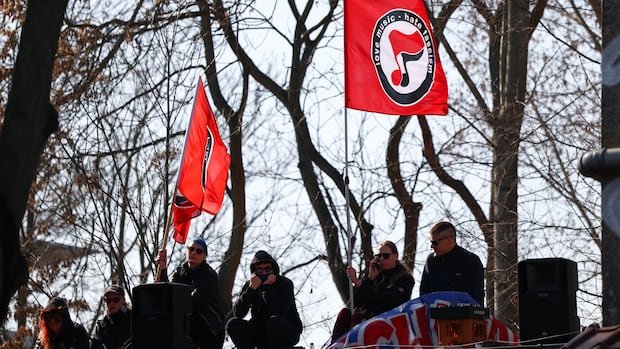
U.S. President Donald Trump has issued an executive order labeling the antifa movement as a “terrorist organization,” as announced by the White House on Monday. This decision follows the tragic assassination of conservative activist Charlie Kirk on September 10 in Utah. Kirk was killed while speaking at a college campus, and a 22-year-old technical college student has been charged with his murder.
Authorities are still investigating the motive behind the assassination and have not indicated any group involvement by the suspect. Nevertheless, the Trump administration has seized this incident as an opportunity to target left-wing groups perceived as being opposed to conservative viewpoints.
Antifa, an abbreviation for anti-fascist, is described as a decentralized and leaderless movement comprising various groups, networks, and individuals, according to the Anti-Defamation League, an extremist monitoring organization. The organization notes that while some individuals claiming affiliation with antifa engage in violent or vandalistic behaviors at rallies, such actions are not representative of the entire movement.
President Trump’s executive order, spanning 370 words, instructs all relevant executive departments and agencies to investigate, disrupt, and dismantle any illegal activities conducted by antifa or those supporting such actions. The order alleges that individuals linked to antifa collaborate with other entities to incite political violence and stifle lawful political discourse.
While federal law enforcement already investigates violent and organized crime associated with various extremist movements, the U.S. government typically refrains from formally designating domestic groups as terrorist organizations due to constitutional protections.
Critics have raised concerns that the administration’s actions could encroach on free speech rights and target opponents of the current administration. The FBI’s Counterterrorism and Counterintelligence Divisions will focus on tracking financial sources, both domestic and foreign, and identifying the central leadership of antifa. Surveillance and investigative measures will be employed, with a particular emphasis on foreign funding channels influencing U.S. politics.
Legal experts caution that designating antifa as a domestic terrorist group may present legal challenges, constitutional uncertainties, and free speech implications, as subscribing to an ideology is not inherently unlawful under U.S. law.

