
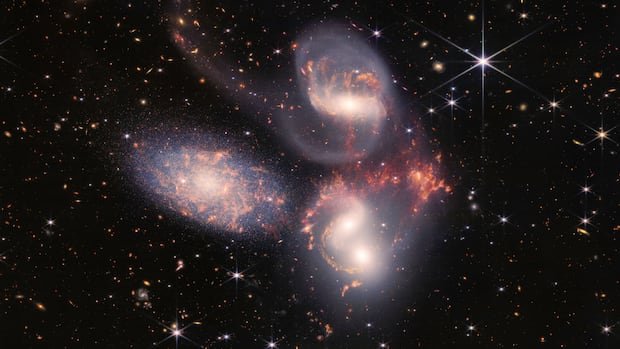

Advancements in technology have opened up new avenues for exploring scientific phenomena both in space and on Earth. Here are the top 10 innovations, natural events, and significant occurrences of 2025, presented in no particular order.
Unveiling Vera C. Rubin Telescope’s ‘First Light’ Images
The Vera C. Rubin Observatory, situated in Chile, showcased its initial images this year. While not the largest telescope globally, it boasts a main mirror spanning 8.4 meters and houses the world’s largest digital camera with 3.2 gigapixels. Over the next decade, the observatory will capture high-resolution images of the entire southern sky nightly. These images will be compiled to create a time-lapse video of the universe, capturing various celestial objects in motion, from nearby asteroids and planets to colliding galaxies, the universe’s expansion, and enigmatic dark matter.

Analysis of Asteroid Bennu Samples
In September 2023, a small capsule landed on Earth carrying samples collected from an asteroid by the OSIRIS-REx spacecraft. Scientists have now revealed their findings on the dark granular material, discovering sugars, amino acids, nucleobases, and carboxylic acids within it. These components, crucial for life on Earth, form the building blocks of DNA and RNA. While this doesn’t confirm life on the asteroid, it does suggest that life-sustaining molecules were prevalent in the early solar system and might have been transported to Earth from space.
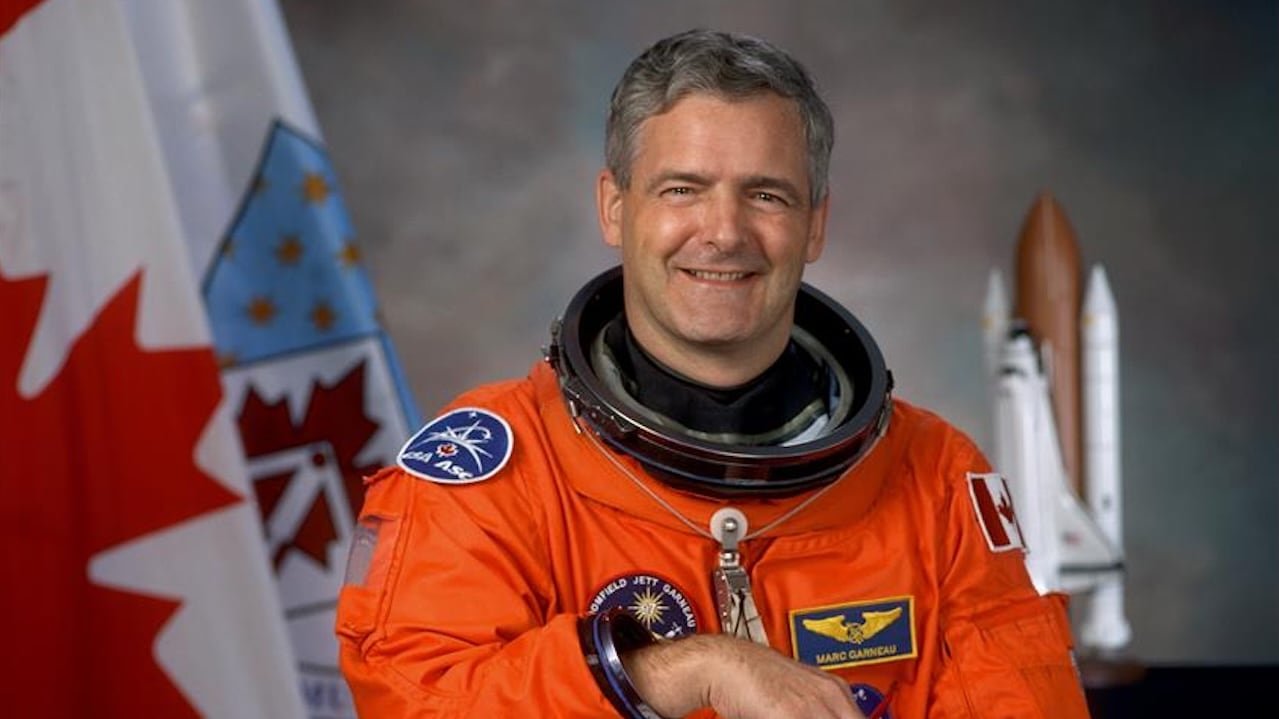
Passing of Marc Garneau, Canada’s Pioneer Astronaut
On June 4, 2025, Marc Garneau, the first Canadian in space, passed away at 76. An ex-naval commander, Garneau was part of the initial group of Canadian astronauts in 1983. He embarked on three spaceflights, including the Space Shuttle Challenger mission in 1984. After his astronaut career, he served as president of the Canadian Space Agency and later ventured into politics, holding ministerial positions. Garneau’s remarkable journey is chronicled in his memoir, “Marc Garneau: A Most Extraordinary Ride.”
READ MORE: Canada’s first person in space, Marc Garneau â and a privileged journalist who knew him
Encounter with Comet 3i/ATLAS
Comet 3I/ATLAS, the fastest comet ever observed hurtling through our solar system at a staggering 209,000 km/hr, was detected for the first time on July 1, 2025, by a telescope in Chile. Its extraordinary velocity, surpassing the sun’s escape velocity, suggests it originated from another star system, traveling through interstellar space for billions of years. Composed of ice and dust, this comet’s passage through our solar system provides insights into the composition of distant star systems.
READ MORE: Here’s what astronomers know so far about the 3rd interstellar visitor ever found
Ocean Acidification Reaches Critical Level
In a concerning development, ocean acidification hit a tipping point this year due to the absorption of excessive carbon dioxide from the atmosphere. This phenomenon poses a severe threat to coral reefs globally. The dissolved CO2 forms an acid that deteriorates coral reefs and the shells of marine organisms like crabs and mussels. Coupled with rising ocean temperatures, this acidification can trigger the collapse of ice sheets and degradation of rainforests. The failure of the UN COP30
