
President Donald Trump’s recent immigration system overhaul proposal has caused uncertainty, leading to the White House clarifying that the new $100,000 fee on visas for skilled workers applies only to new applicants, not current visa holders. The proclamation signed by Trump mandates a $100,000 annual fee for visas aimed at highly skilled jobs in demand by technology companies. White House press secretary Karoline Leavitt emphasized that the fee is not applicable to current visa holders or renewals but only to new applicants.
Effective from 12:01 a.m. ET Sunday, the fee is set to expire after a year but could be extended based on the government’s assessment of national interests. The White House assured that the new rule does not hinder the travel capabilities of existing visa holders. However, immigration lawyer Kathleen Campbell Walker criticized the sudden change, stating that it introduces chaos into the H-1B visa process with minimal notice.
Commerce Secretary Howard Lutnick initially indicated that the fee would be an annual cost for companies, but a White House official later clarified it as a one-time fee. The official mentioned that the policy on renewals is currently under discussion. If implemented, the fee increase would significantly raise the cost for skilled worker visas from $215.
India’s Ministry of External Affairs expressed concerns about the potential disruption to families due to Trump’s plan, given that over 70% of H-1B visa holders are from India. Critics argue that the program undercuts American workers by hiring foreign workers at lower wages. Trump defended the move, asserting that the tech industry supports it, while Lutnick claimed that major companies are in favor.
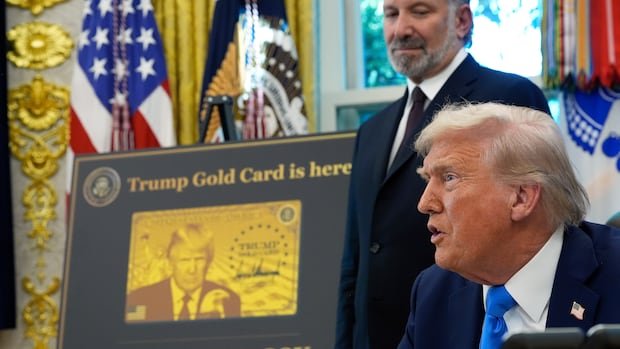
The proposal also includes the introduction of a gold-card visa priced at $1 million for wealthy individuals and $2 million for companies sponsoring employees. A platinum card costing $5 million would allow extended stays in the U.S. without facing U.S. taxes on foreign income. Critics viewed the fee increase as a move towards addressing H-1B program abuses, while some called it a fan service for immigration restrictionists.
The article further discusses concerns and reactions from various stakeholders, including tech companies, advocacy groups, and legal experts. It highlights the potential impact on the visa lottery system, past visa trends, and proposals for reforming the H-1B program. Melania Trump’s previous H-1B visa approval in the 1990s is also mentioned in the context of the broader discussion on visa policies and reforms.

